What the Fix Involves
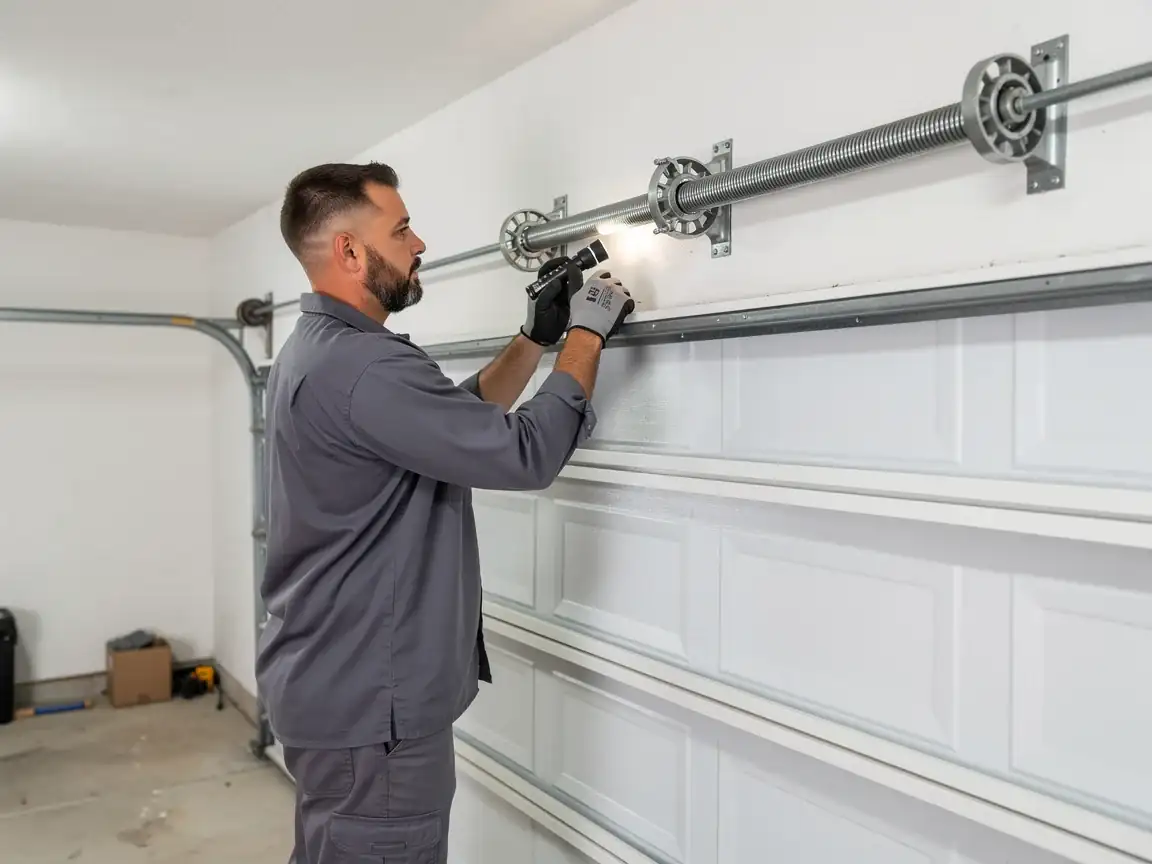
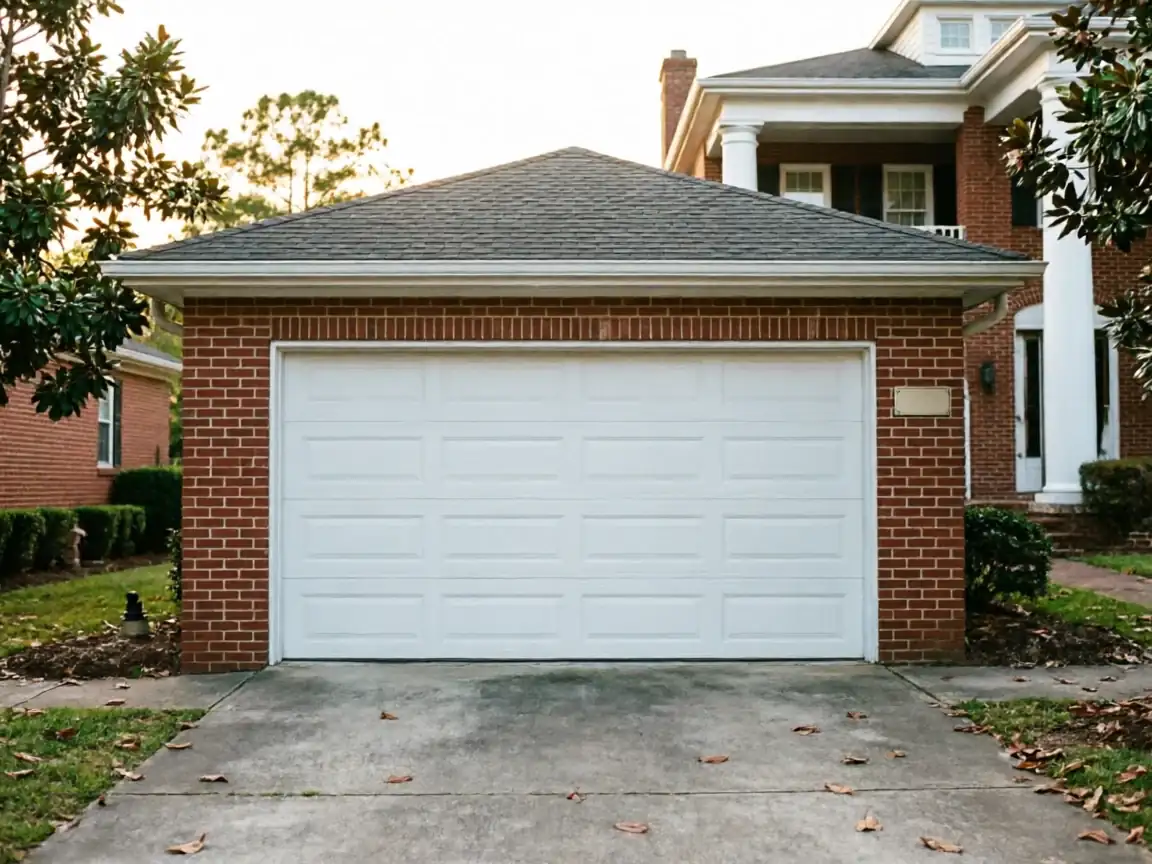
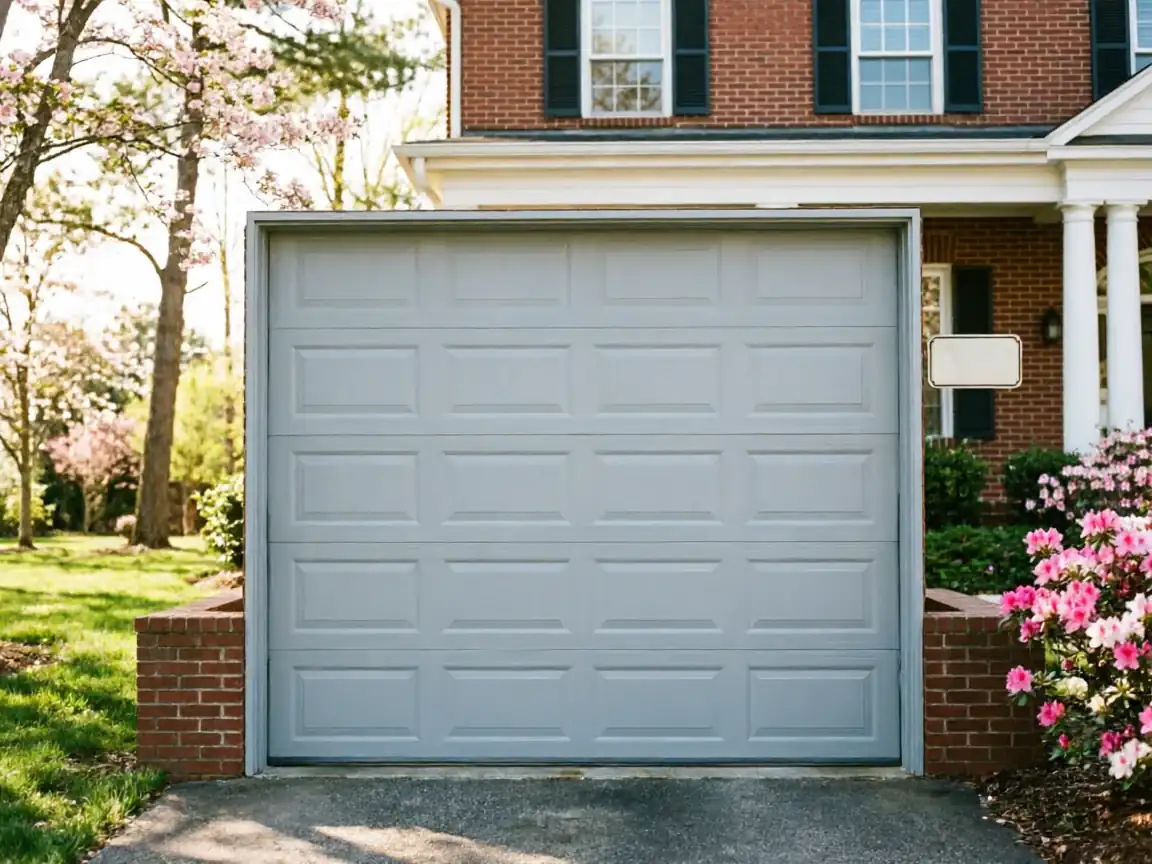
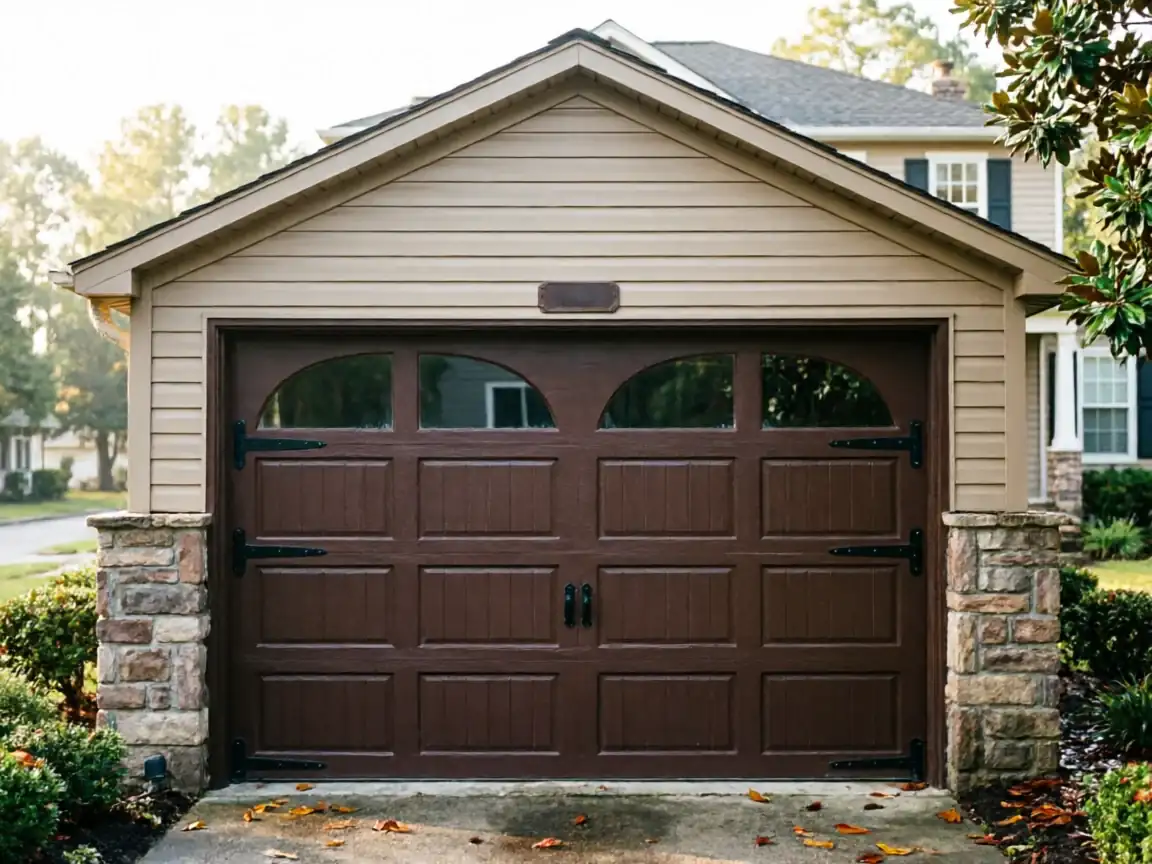
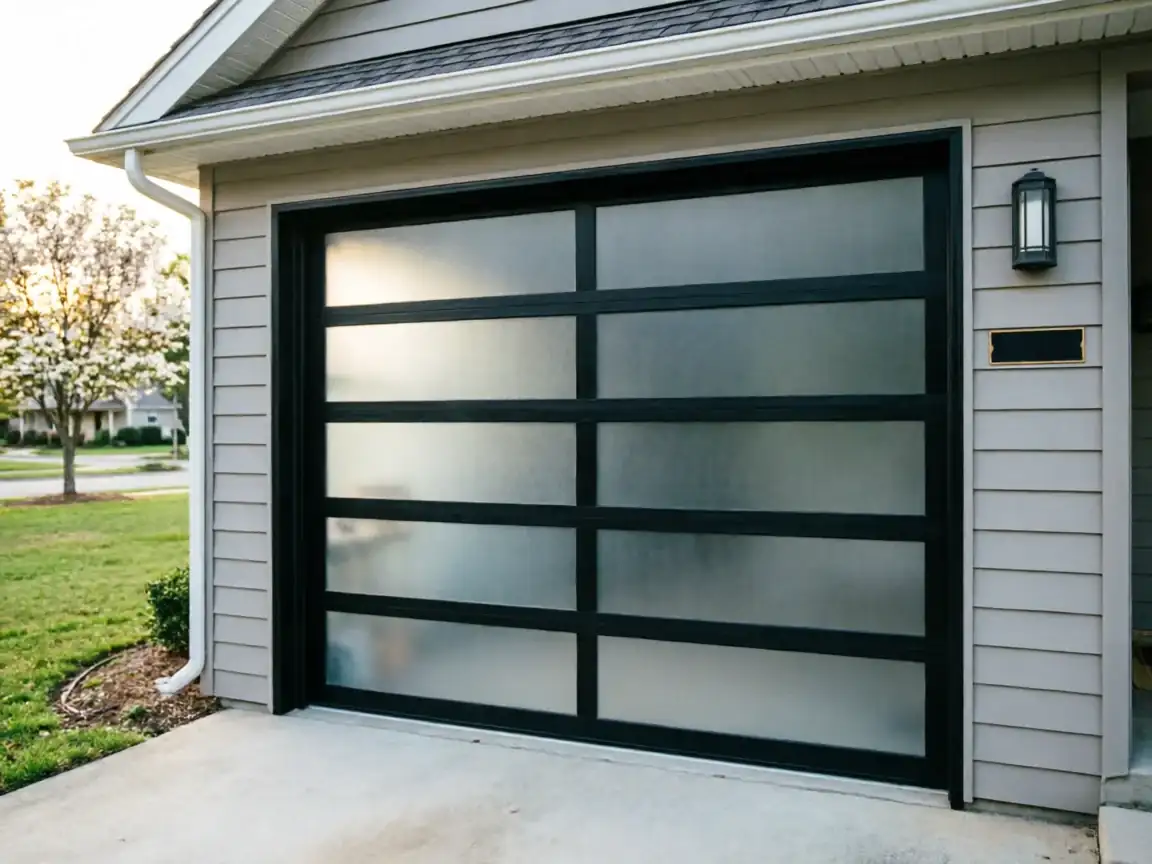
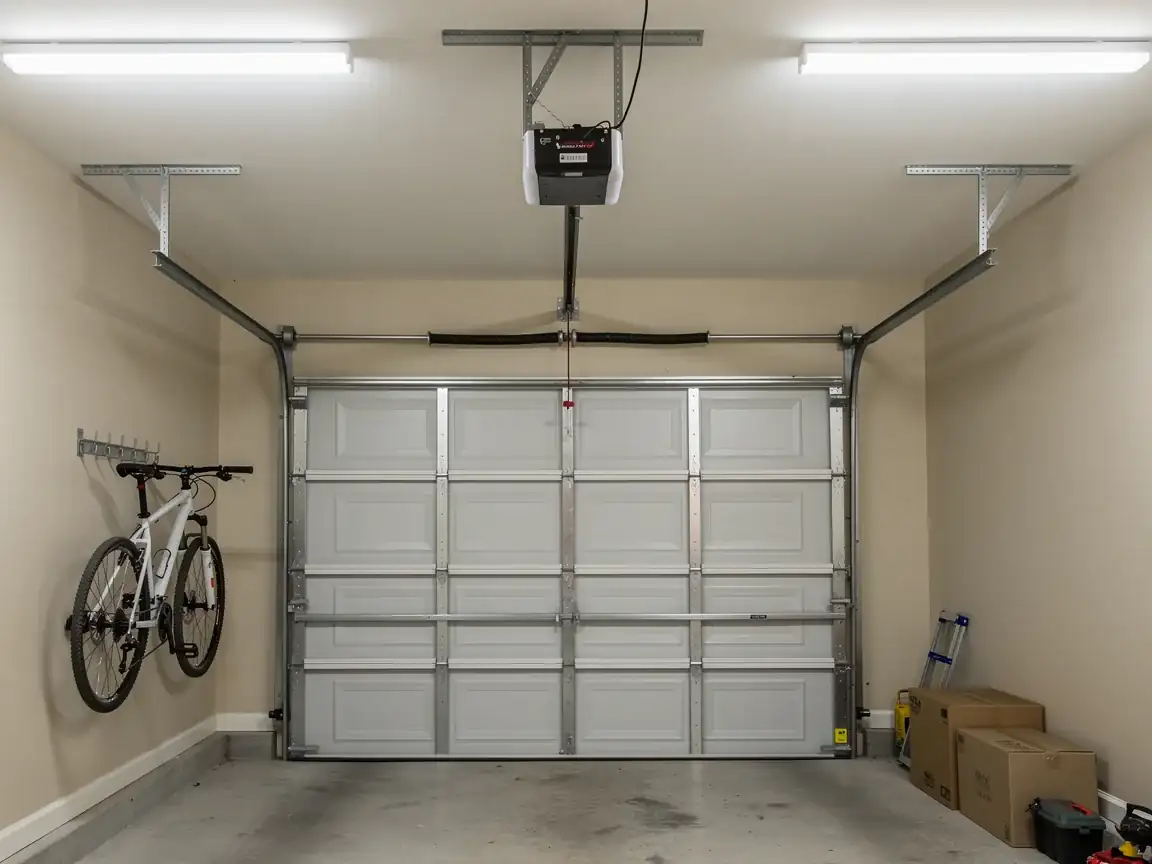
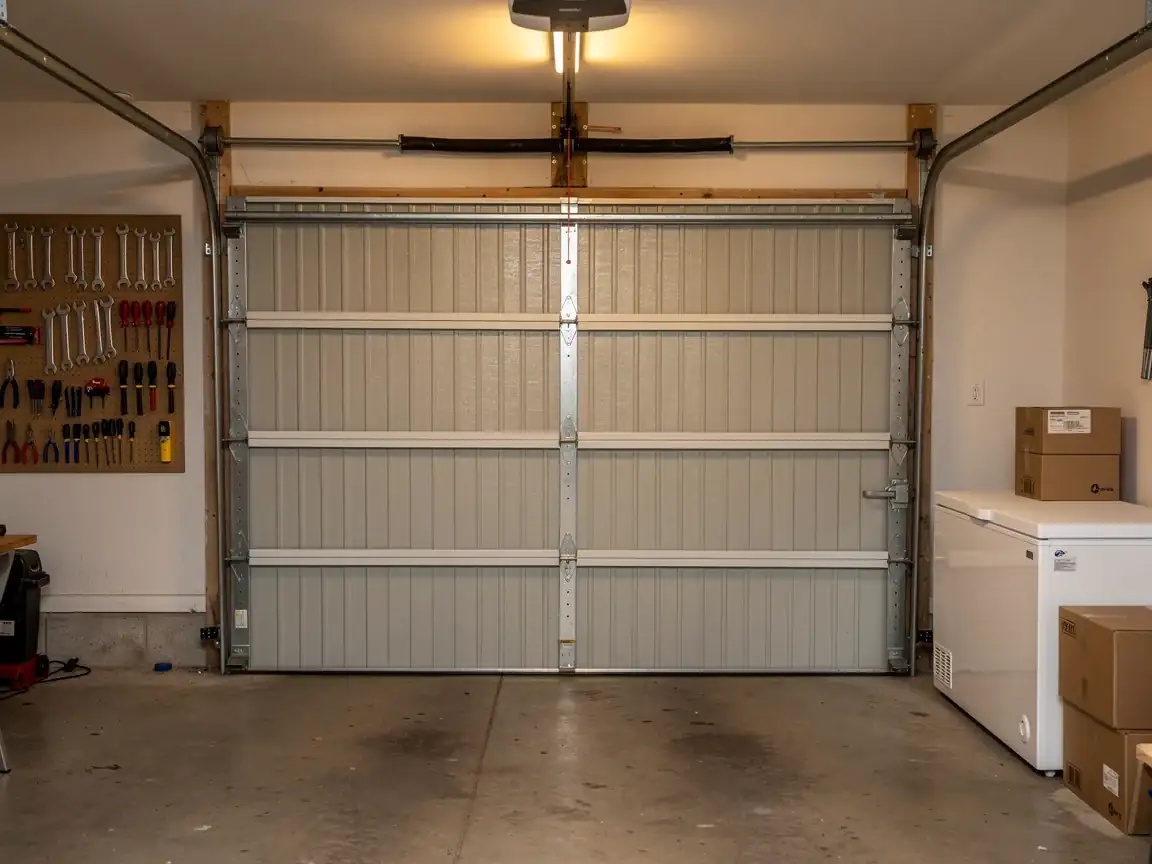
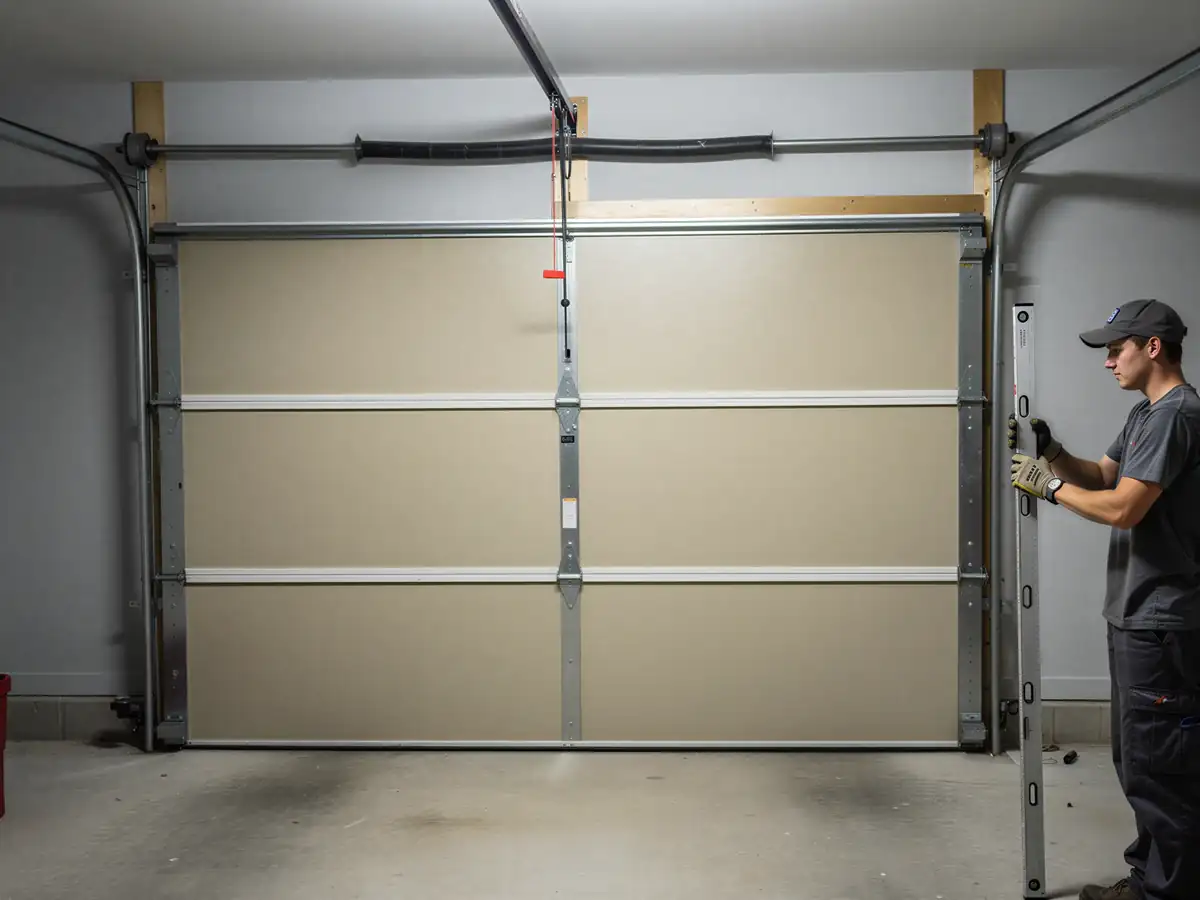
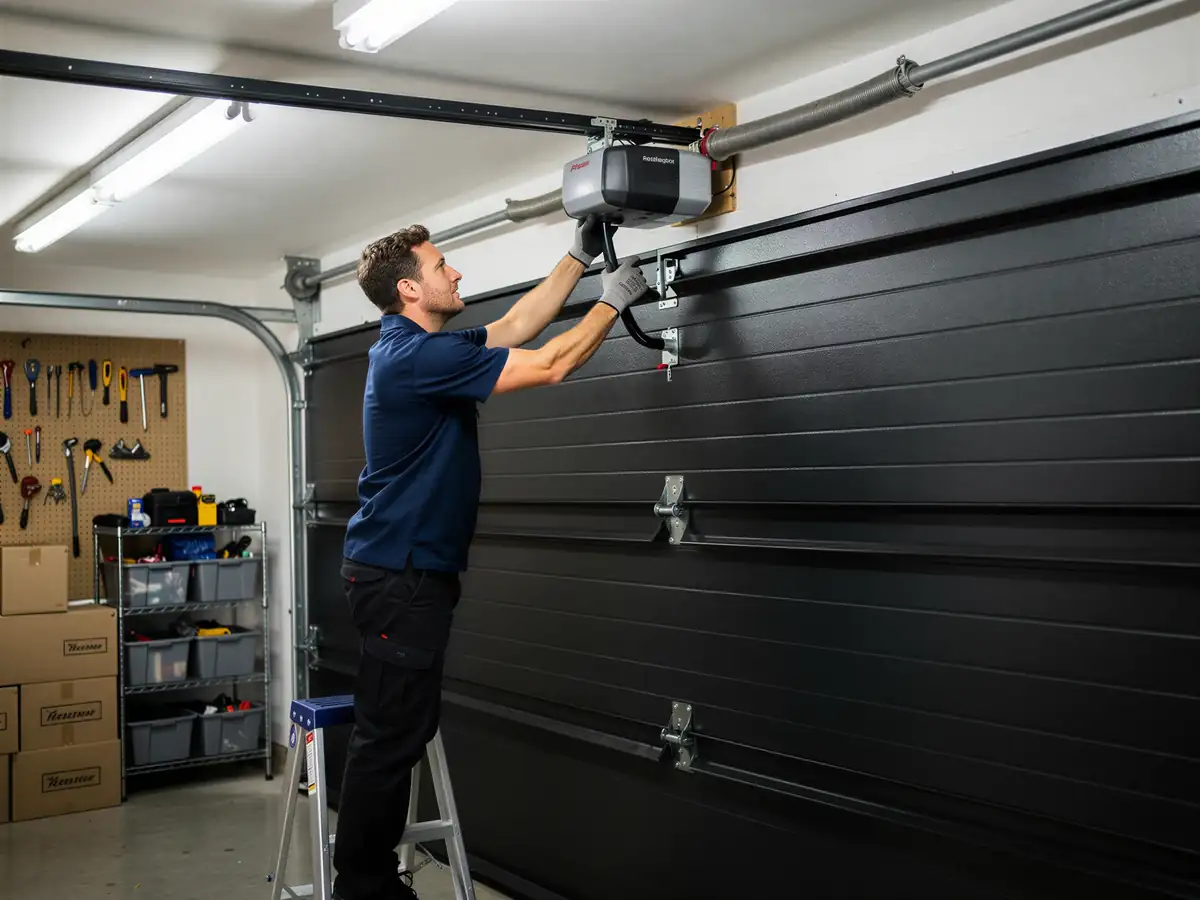
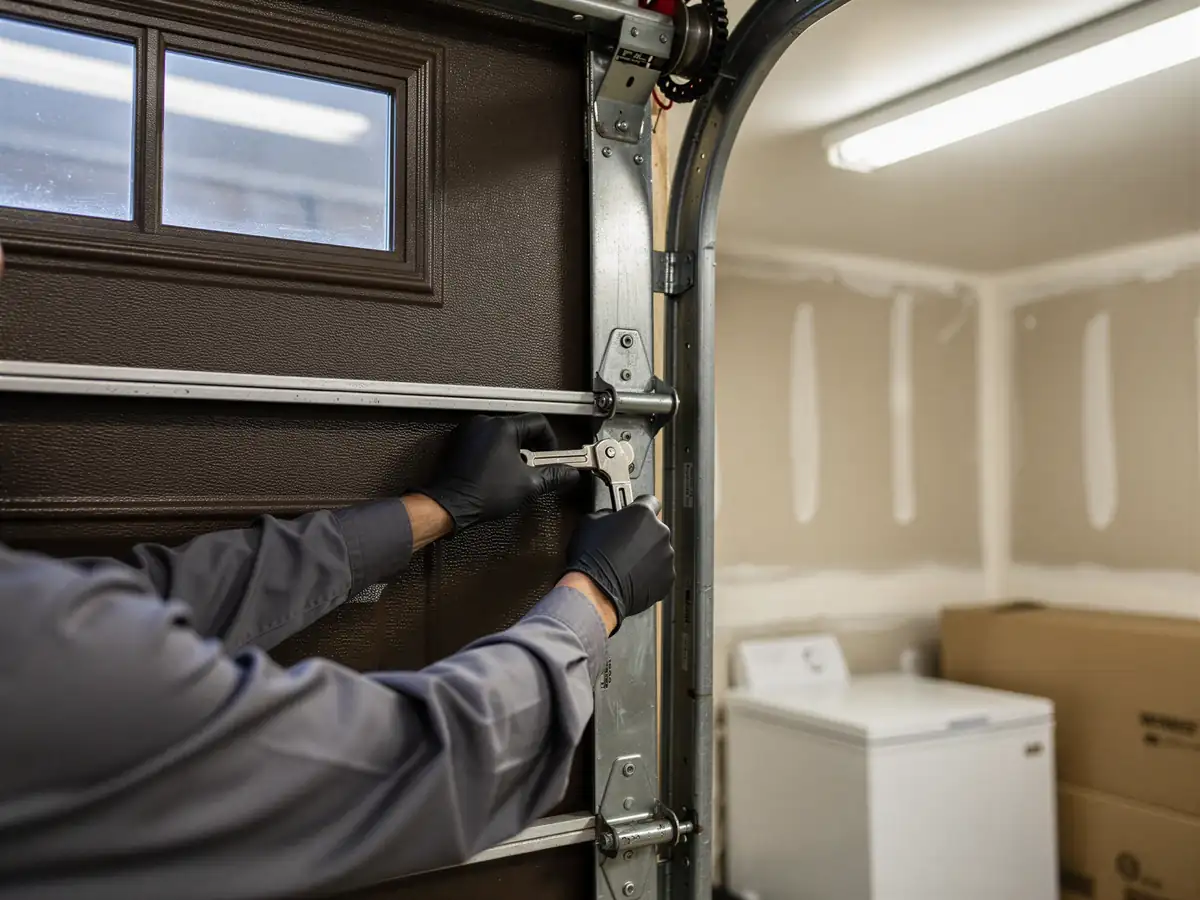
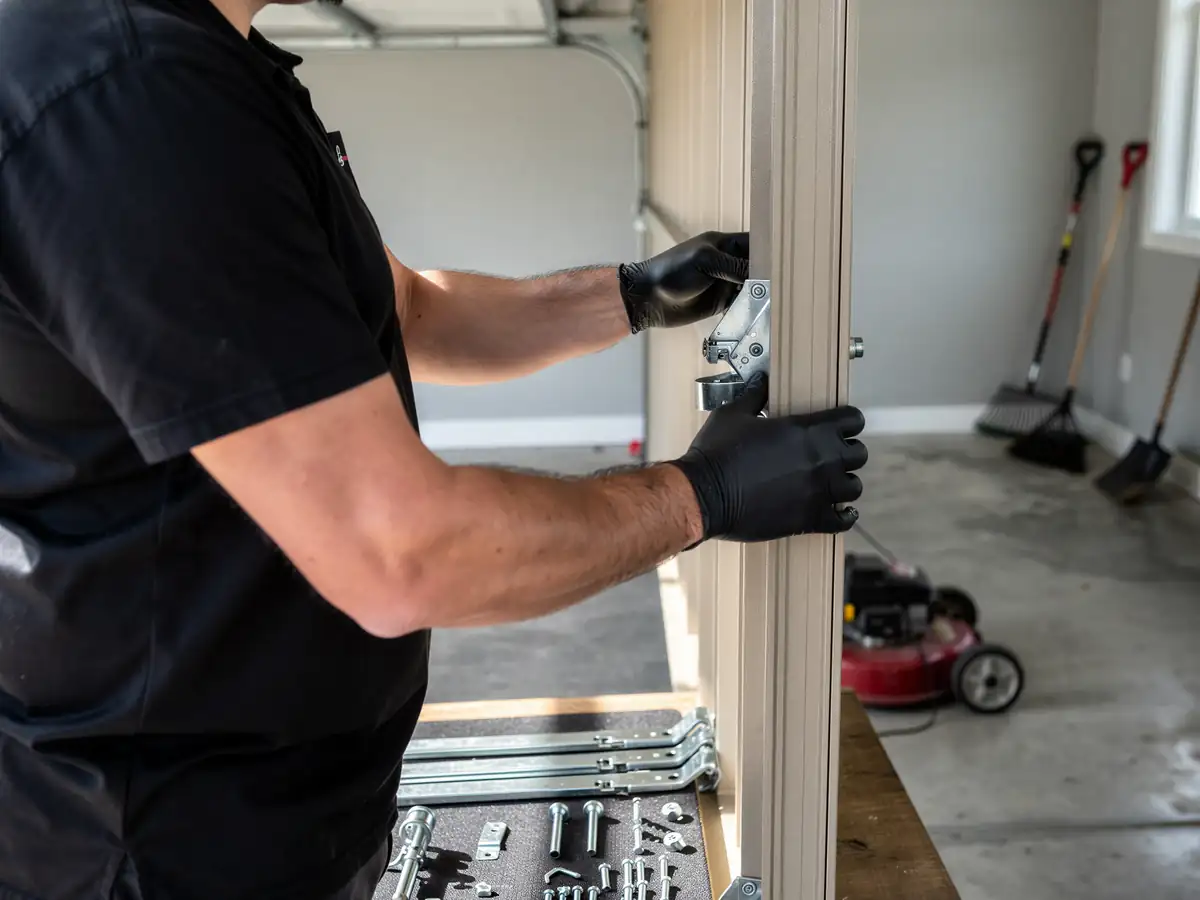
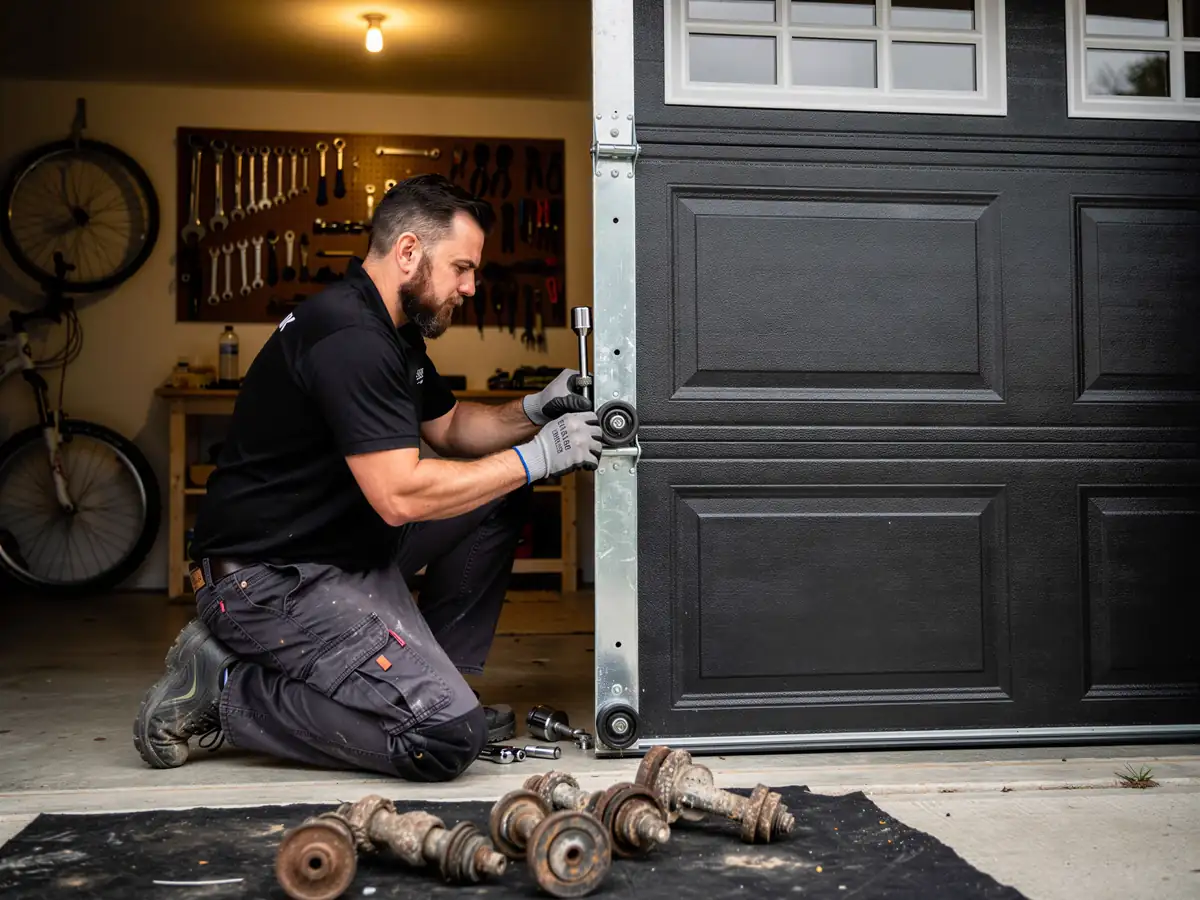
Coaling's houses carry a median build year around 1997, which puts a lot of doors here right in the era when builders shipped steel 7-ball rollers riding in plain steel track - no sealed bearing, no nylon wheel, just a steel ball bearing inside a steel roller stem. That hardware works fine for a long time, but it's also the loudest, roughest-wearing setup on the market, and by year twenty-five or so the stems wear oval and the rollers start binding in the track instead of rolling through it. A roller replacement here usually means pulling the whole set - ten rollers on a standard double door - and deciding whether to put back the same steel style or step up to nylon rollers with sealed bearings, which run quieter and last longer under the same door weight. We check the track for wear grooves while the rollers are out, since a track that's been chewed on by dying steel rollers for a few years often needs more than new wheels to run smooth again.
Time on the Job
A straightforward roller swap on a double door, where the track itself is still straight and the hinges aren't shot, generally runs an hour or two once the truck is parked and the door's open. That changes if the track has to come off the jambs to straighten a bent section, or if a roller has already jumped the track and bent a hinge on the way out - both add time because they're separate repairs riding along with the roller job, not part of it. We don't pad the estimate with extra work that isn't there, but we also won't tell you it's a twenty-minute job if the track's been dragging metal-on-metal for months.
The Cost of This Job
We're not going to put a number here that isn't backed by a quote, because roller jobs vary too much on what else the door needs. What we can say is that Coaling's median household income, at $83,587, runs noticeably higher than the broader service area's $73,292 - and in practice that shows up as more owners here choosing the nylon sealed-bearing upgrade over patching with the same steel rollers that came with the house. It's a reasonable call on a door that's getting regular use: nylon rollers cost more per set but don't need the periodic lubrication steel rollers do, and they run quiet enough that you stop noticing the door at all.
The Symptom
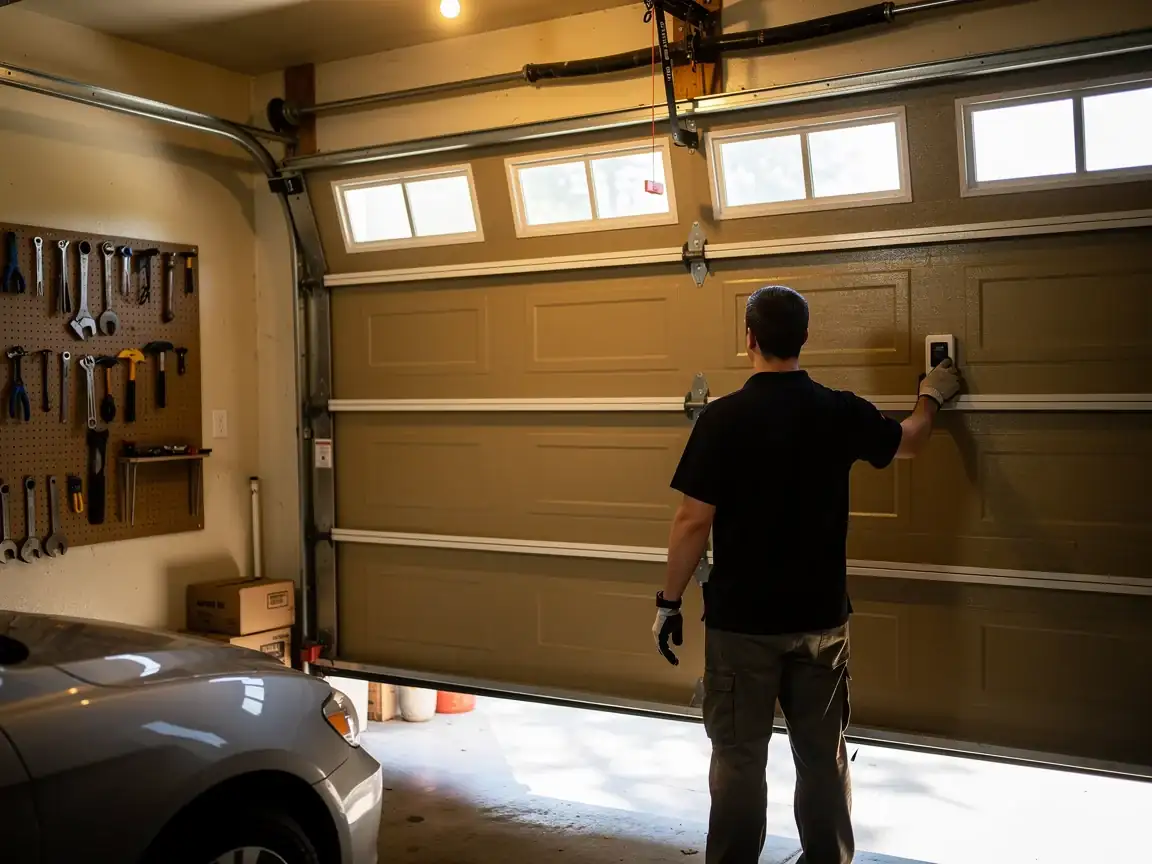
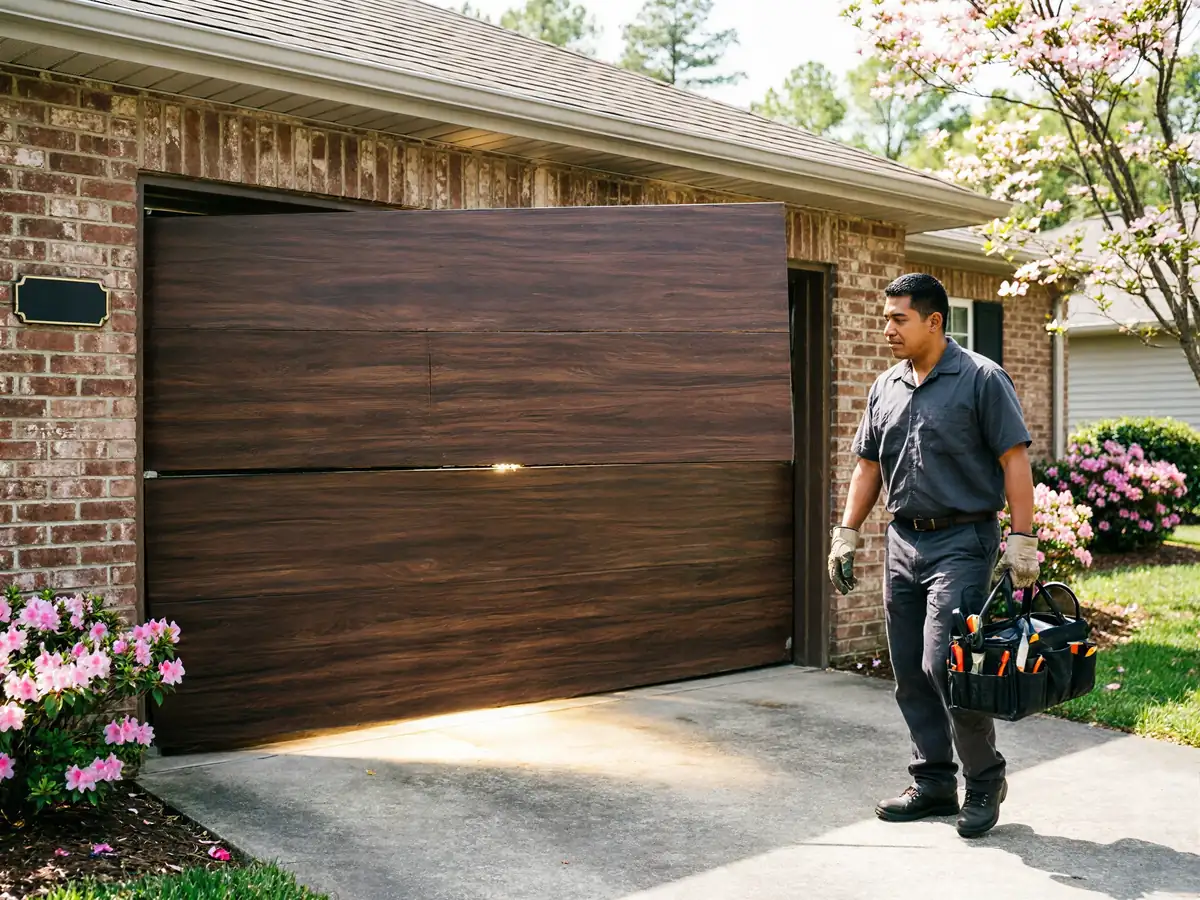
The usual first sign is noise - a grinding or scraping that wasn't there a year ago, worse at the top or bottom of the travel where the roller's taking the most load going around the curve into the horizontal track. Sticking is the next stage: the door hesitates at the same spot every time, because a worn roller stem is catching instead of turning. The area sits in a mild climate with occasional freeze, so rollers rarely crack outright from cold the way they can further north, but a hard freeze can stiffen old grease on steel rollers enough that the door groans on the first open of the day even when nothing's actually broken yet.