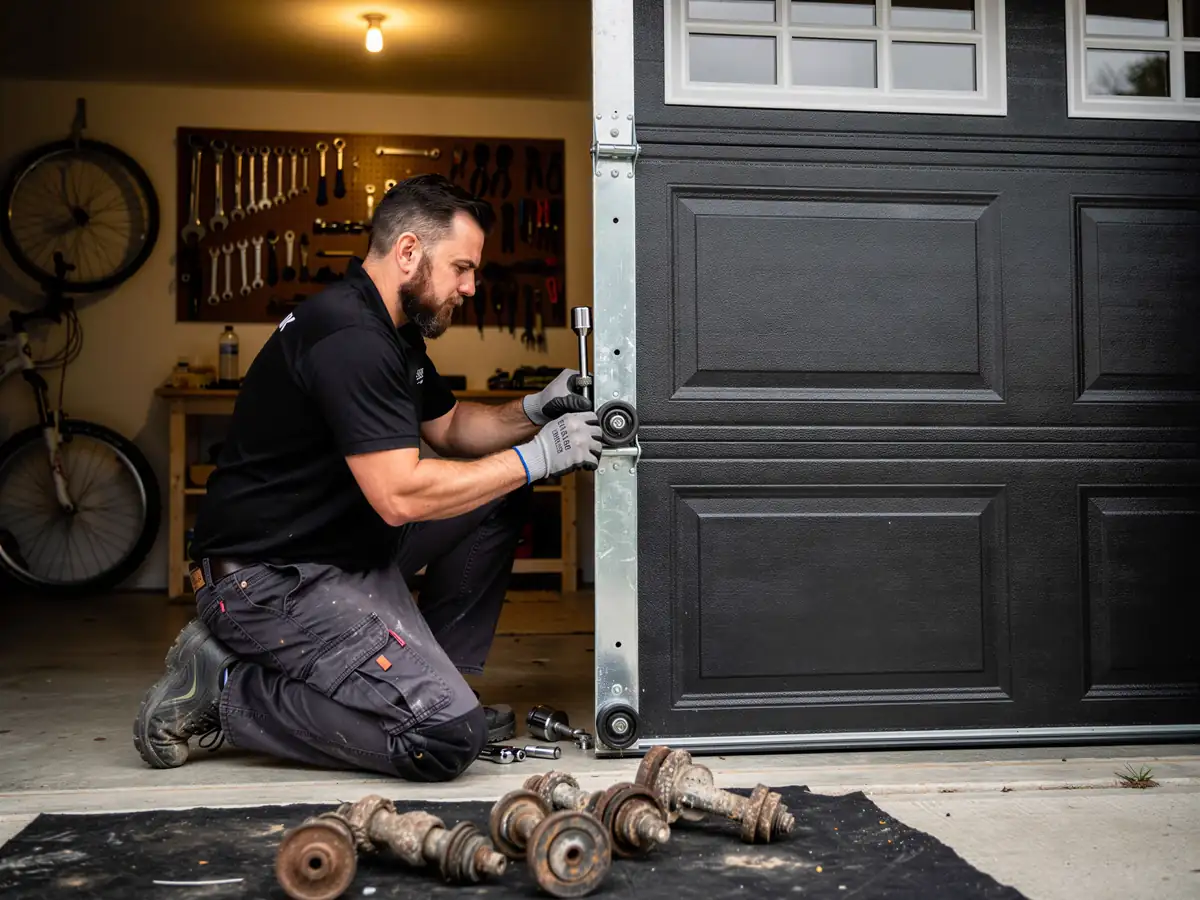
Why This Fails Locally
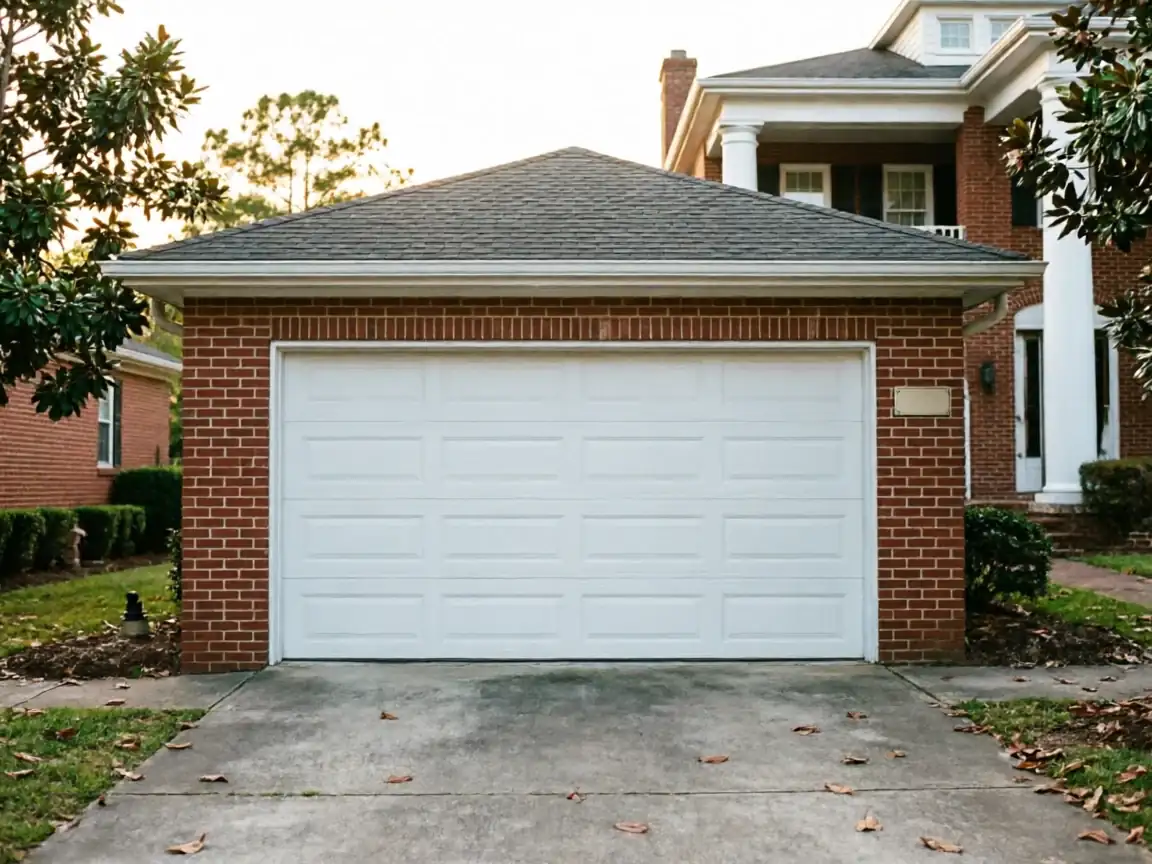
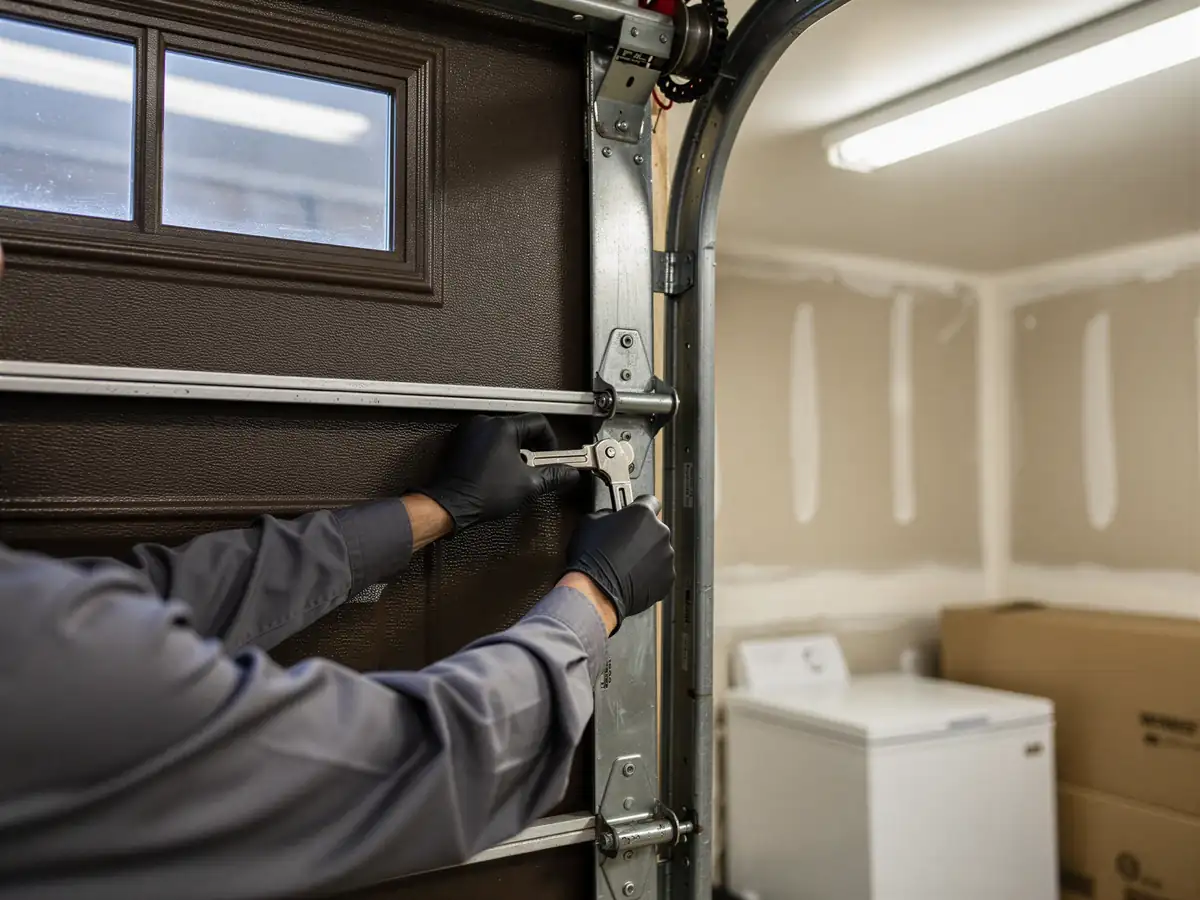
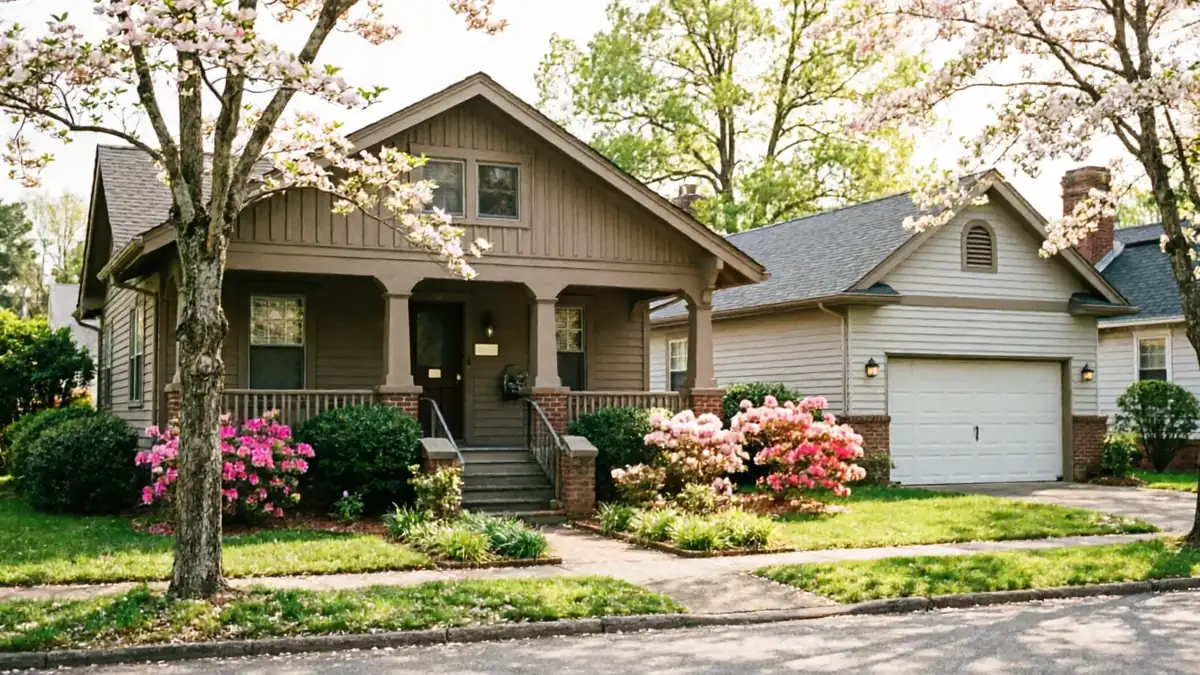
Most of the houses we work on around Tuscaloosa were built between 1964 and 2004, with the bulk of that stock going up in the 1980s and 90s across the eight areas we cover. That generation of doors almost always shipped with steel rollers riding in steel track, no nylon, no sealed bearing. Thirty-plus years later, those rollers are worn oval instead of round, and the noise you hear on the way up is metal grinding on metal.
Tuscaloosa's climate doesn't help. We sit in a mild band with occasional freeze, which means the garage swings through damp summers and the odd hard freeze in winter without ever settling into one steady condition. That cycle - humidity, then a cold snap, then humidity again - dries out old roller grease, lets rust bloom on the stems, and makes steel rollers seize in the track rather than roll through it. On an attached garage with no real climate control, that cycle never stops.
So the pattern we see is specific: a door from the 80s or 90s, original steel rollers, stiff or jerky travel, and a grinding sound concentrated at the same two or three spots on the track. That's not a spring problem and it's not usually an opener problem. It's the rollers, and replacing them is a contained job if you catch it before the stems bend or the track gets gouged.
The Cost of This Job
We don't have a fixed number to quote you here
Roller count, roller material (steel vs. nylon vs. sealed-bearing), and whether the track needs straightening or replacing all move the price. What we can tell you is how to think about it: a straight roller swap with the track still true is a small job. Add in a bent track from rollers that seized years ago, or stems that sheared off in the bracket, and the job grows.
One honest limitation
If your rollers have been grinding long enough to chew visible gouges into the track, a roller-only fix won't hold. We'll tell you straight if the track needs replacing alongside the rollers rather than quote you a roller job that comes back in six months. We'd rather lose the smaller ticket than sell you a fix that doesn't fix it.
Getting It Booked In
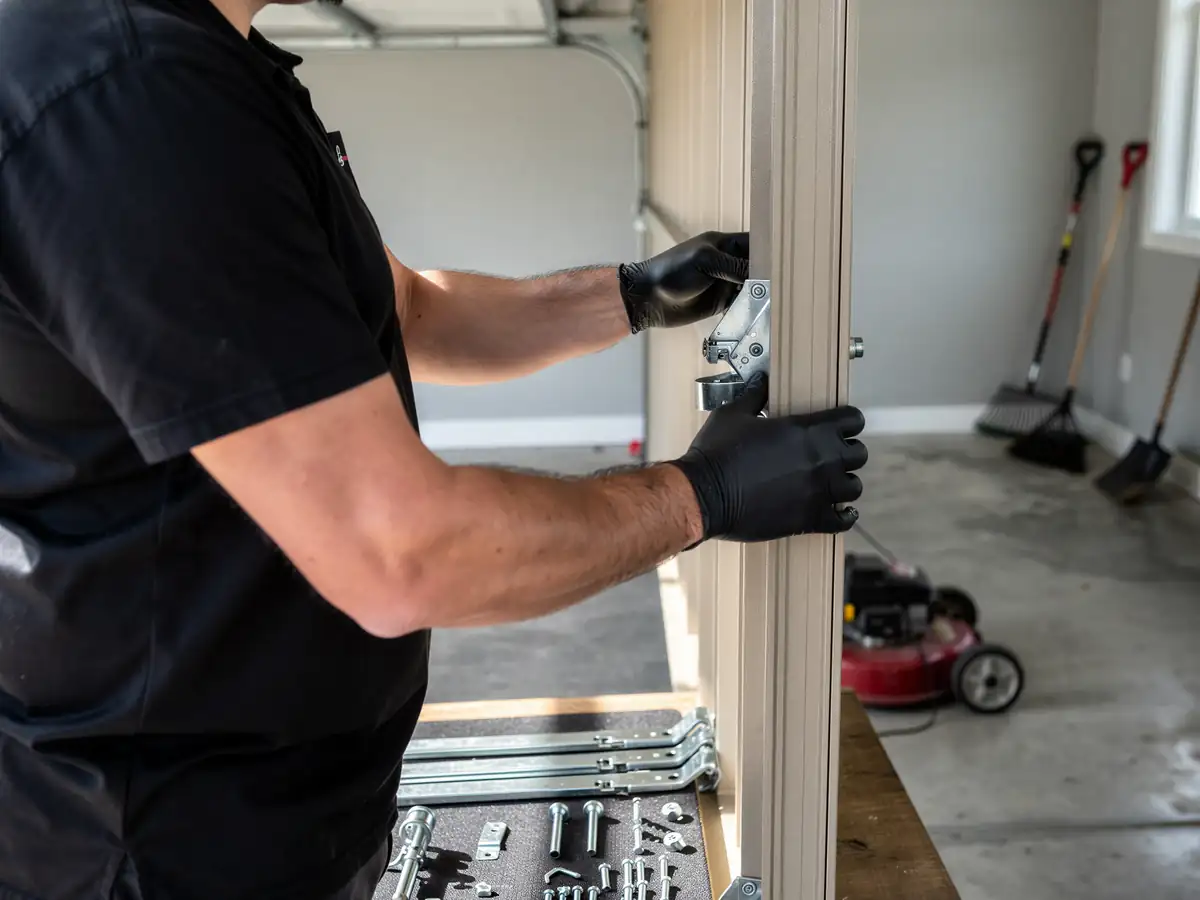
If you're in one of the areas we run trucks through - Holt, Northport, Cottondale, Coker, Coaling, Brookwood - roller replacement is a same-visit job in most cases, since it doesn't require ordering spring sets or opener parts. We carry steel and nylon rollers on the truck; sealed-bearing rollers for a quieter door sometimes need a day's lead time depending on size.
Tell us when you call whether the door is grinding at the same spot every cycle or at random points. That detail alone tells us if we're looking at two or three bad rollers or a full set gone, and it changes what we load before we leave the shop.
The Symptom
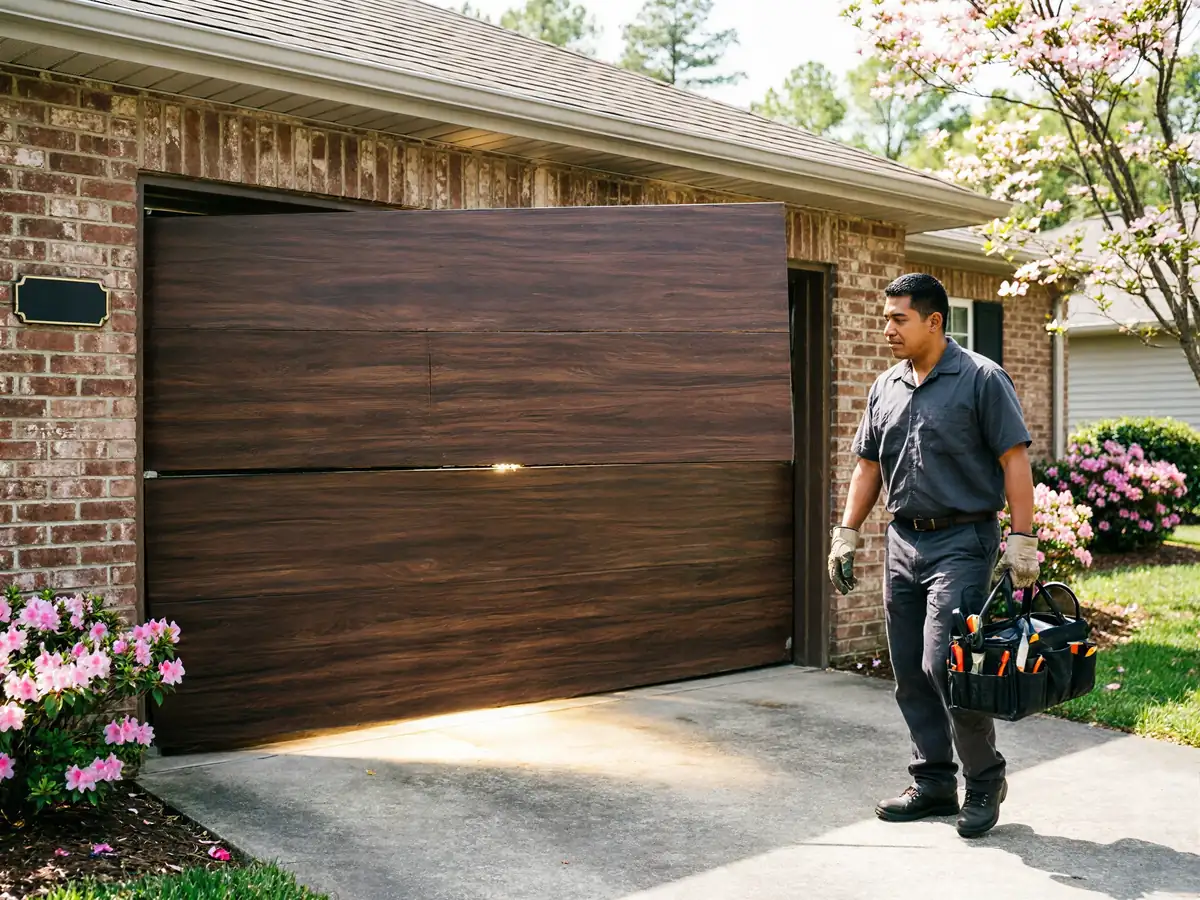
The giveaway is sound and feel, not appearance - you usually can't see a worn roller from the driveway. Listen for a grinding or popping noise that happens at the same point in the door's travel every single time, usually right where the door crosses from the curved section of track into the horizontal run. The door may also hesitate or jerk at that spot instead of moving smoothly.
A second sign: the opener strains harder than it used to, or trips its force sensor and reverses, even though nothing else on the door has changed. Worn rollers add drag, and the opener has to work against that drag on every cycle. If you're also hearing a dry squeak rather than a grind, that can sometimes be lubrication rather than worn rollers - worth ruling out before you assume the rollers themselves are shot.