Where This Job Goes Sideways
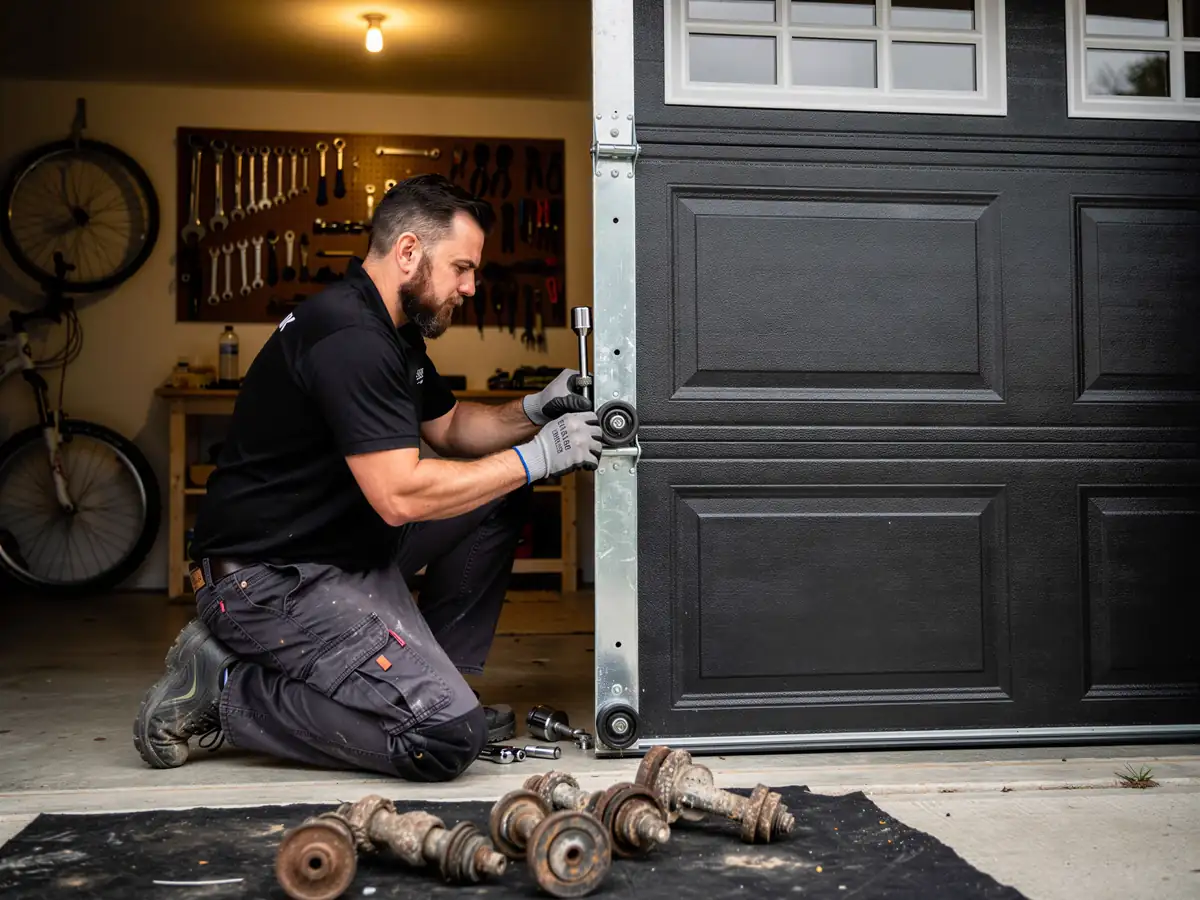
Moundville's housing stock centers around 2002, which puts most doors here in the builder-grade wave that came standard with 7-ball nylon rollers on stamped steel tracks - the cheapest option a builder could spec and still pass inspection. Twenty-plus years on, those rollers are the usual reason a door here starts grinding instead of gliding. The stem wears oval inside the roller housing, the bearing dries out, and the door starts chattering on the way up.
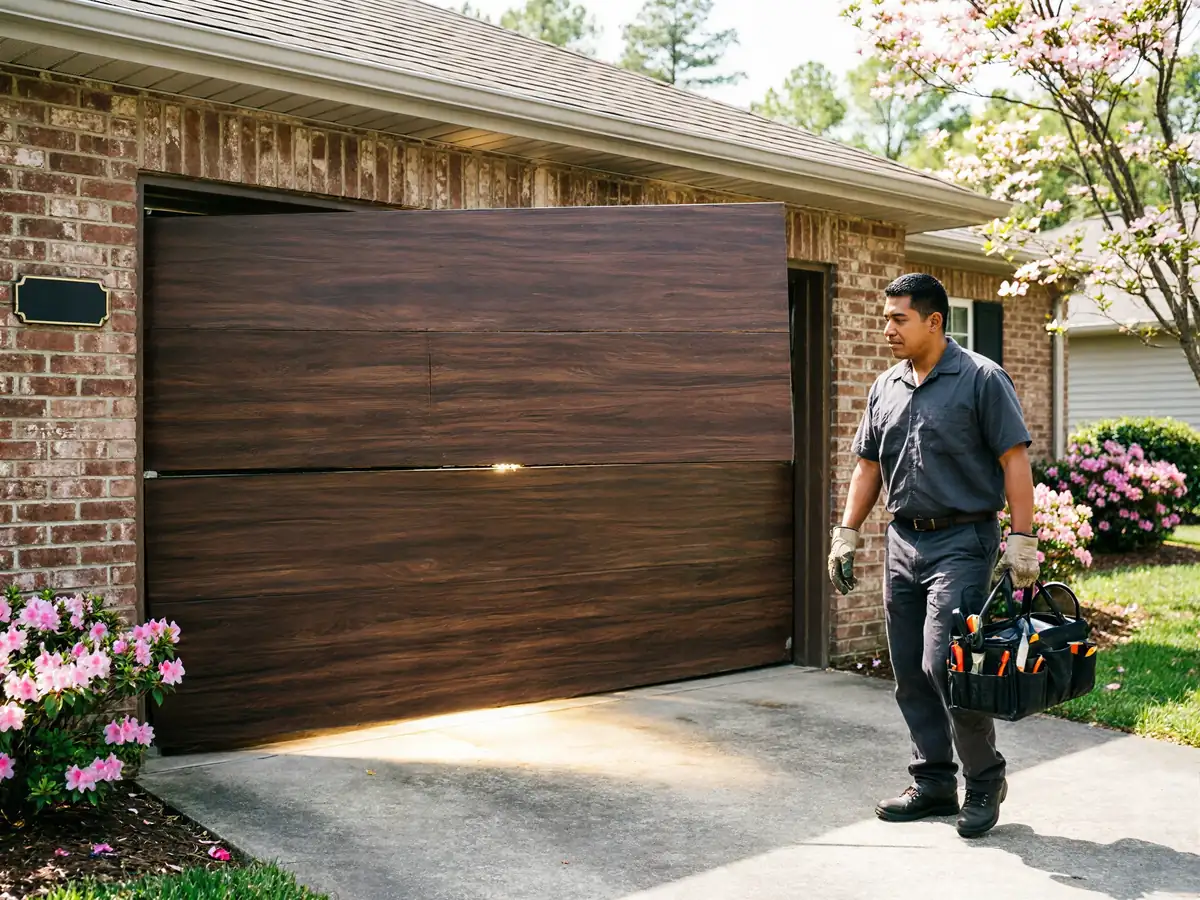
Where it goes sideways is when a homeowner hears that grinding and assumes it's the opener. We get out there, open the door by hand, and find the real issue is a track full of roller debris - flakes of worn nylon packed into the track groove, making every roller behind the bad one work harder than it should. By the time one roller fails, two or three others are usually close behind it, because they all went into service the same year and see the same cycles.
The other failure pattern we see in this part of the service area is a track that's slightly bent from a roller binding and someone forcing the door anyway. That's not a roller job anymore - that's a track repair stacked on top of a roller job, and it costs more to fix both at once than it would have to catch the roller early.
Can You Do This Yourself
Swapping a single roller on a door that's down and unplugged is within reach for someone comfortable with a wrench and a little patience
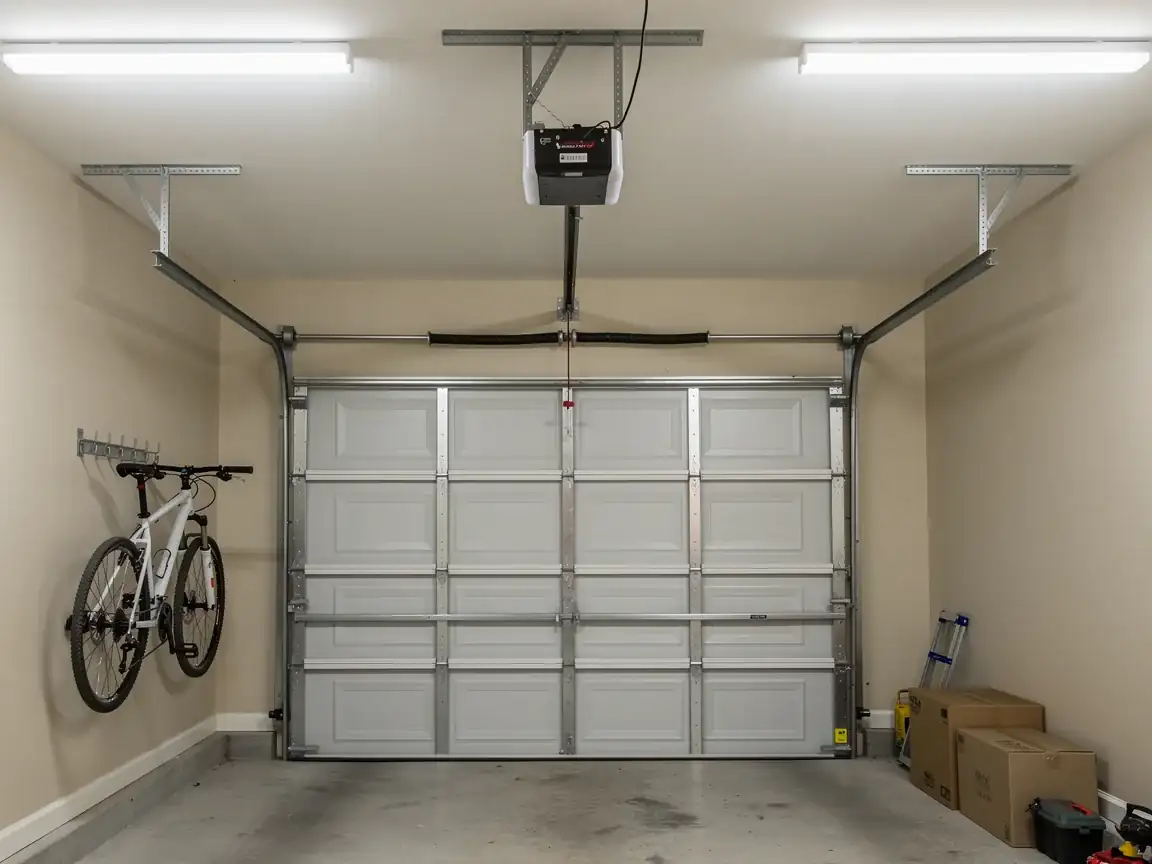
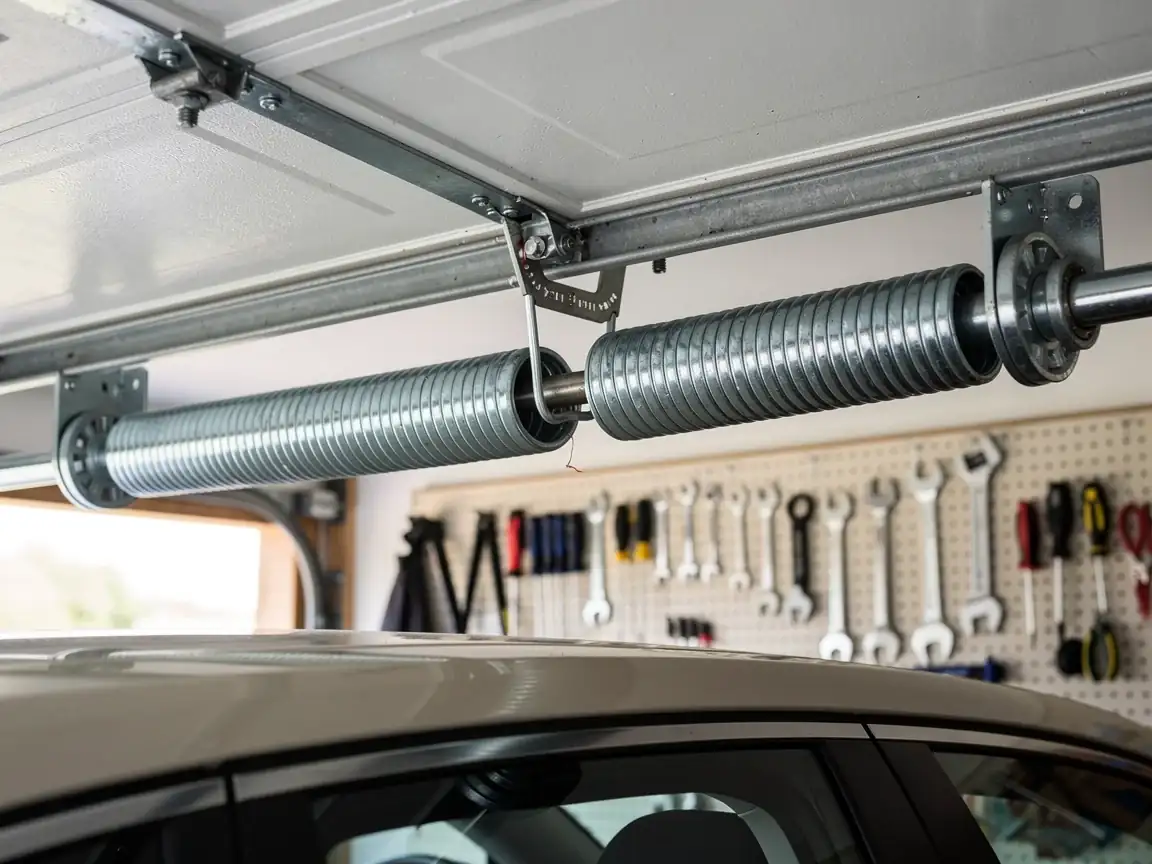
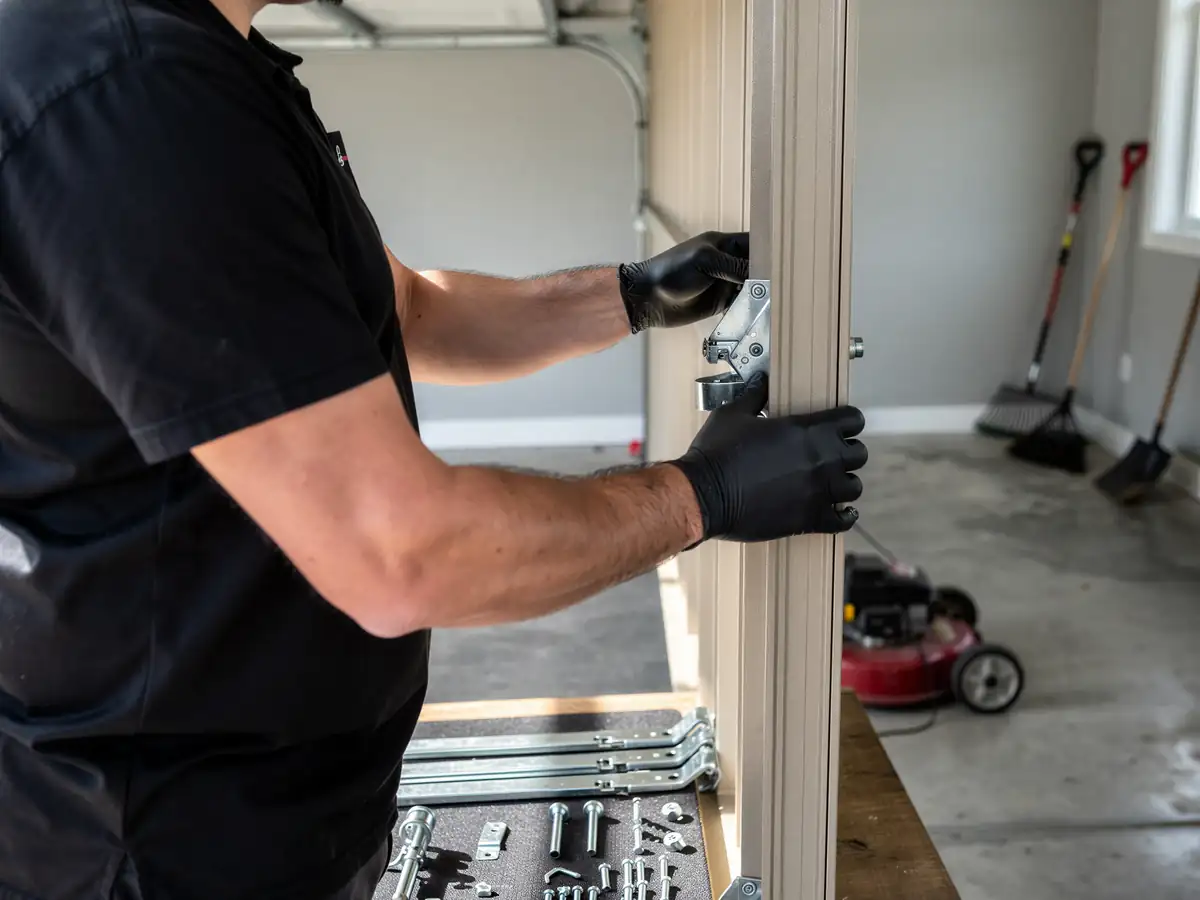
Loosen the track bracket, slide the old roller stem out, slide the new one in. Where it stops being a weekend job is the bottom two rollers on either side, which sit under spring tension even with the door closed, and the top roller near the opener arm, which means working close to the spring assembly either way.
We're not going to tell you every roller job needs a truck out from Tuscaloosa
If you've already got the door down, the roller is a plastic 7-ball unit, and you're only touching one of the mid-track rollers, that's a reasonable DIY call. What we'd steer you away from is replacing all ten rollers yourself on a door this age, because once you're pulling that many at once you're also working the track alignment, and a track that's off by even an eighth of an inch after reassembly will bind every roller you just installed.
If the door came off the opener trolley, if a cable looks frayed, or if the spring is visibly stretched
Stop and call - that's not a roller problem anymore.
The Cost of This Job
We don't publish a flat number for roller replacement because the job scales with how many rollers are bad and what they're made of. A single worn roller on a door with otherwise sound hardware is a small job. A full set of ten, especially if the homeowner wants to step up from plastic to steel ball-bearing rollers - which hold up better against the humidity swings this area gets - runs more, both in parts and in time on the track.
What we can tell you without a number is where the cost actually comes from on a 2002-era Moundville door: it's rarely the rollers themselves. Rollers are inexpensive parts. The labor is in getting the track clean, checking alignment on both sides, and making sure the new rollers aren't just going to wear the same way the old ones did because of a bent rail. Skipping that step to save money on a quote means paying for the same roller job again in a couple of years.
We'll give you a real number after we see the door, not before.
Getting It Booked In
We cover Moundville out of Tuscaloosa, about 17 miles up the road, along with closer in and the stretch out toward Vance. Because of that distance, we ask homeowners here to describe what the door is doing - grinding, chattering, catching at a specific spot in the track - so we can bring the right rollers on the first trip instead of a guess.
With roughly 1,164 households in Moundville, this isn't a corner of the service area where we're driving past daily, so a clear description up front saves a second trip more here than it would somewhere we pass through every day. If you can get a phone video of the door moving, even better - a dragging stutter near the bottom of the track looks different from a hitch near the top, and that tells us which rollers to expect before the truck leaves Tuscaloosa.
Time on the Job
A single roller swap, once we're on site with the door down
Usually takes less time than it takes to explain the problem over the phone. A full set of rollers across both tracks, with an alignment check built in, takes longer - we're not rushing a step that determines whether the fix lasts.
The variable that adds time on Moundville doors specifically is how long the worn rollers have been grinding before anyone called
A roller caught early comes out clean. A roller that's been chewing on the track for months leaves metal shavings and worn groove edges that need cleaning before a new roller will ride smooth in that spot. That extra fifteen minutes of track cleanup is cheap compared to installing a new roller into a track that's still chewing on it.
What the Fix Involves
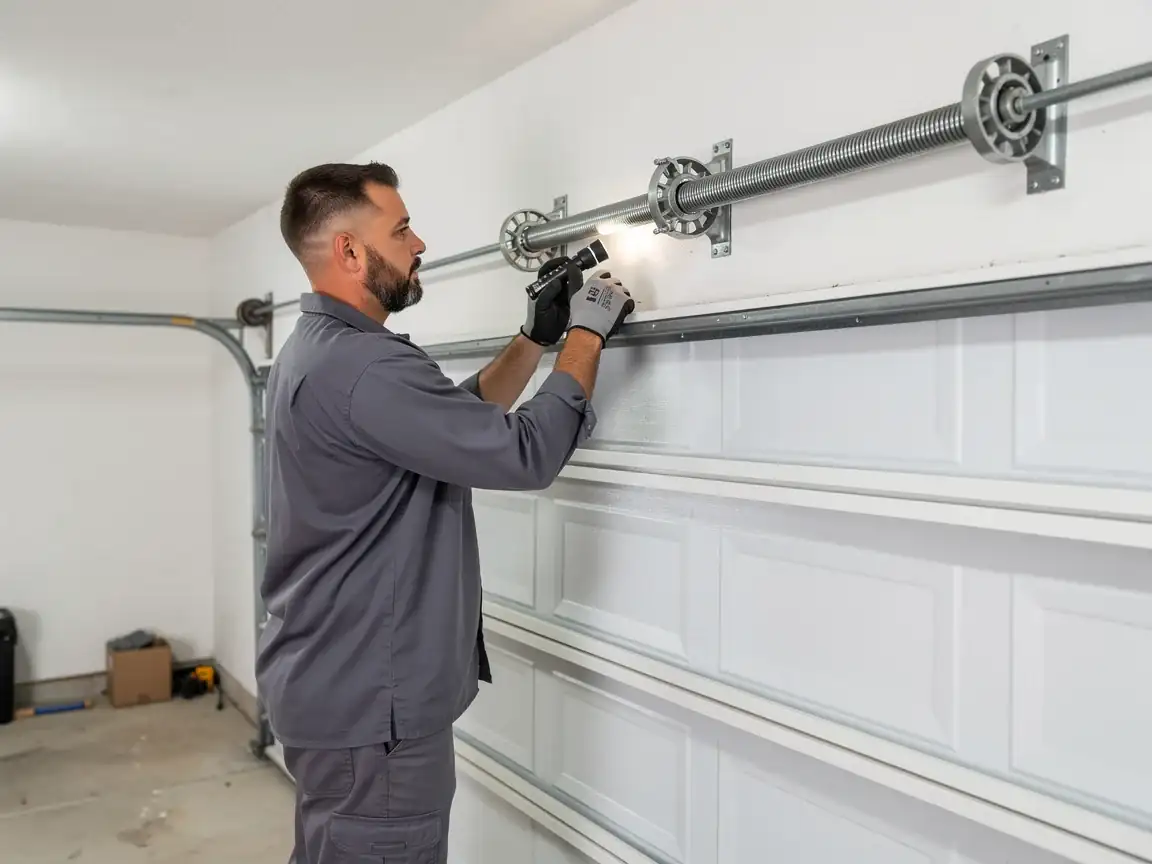
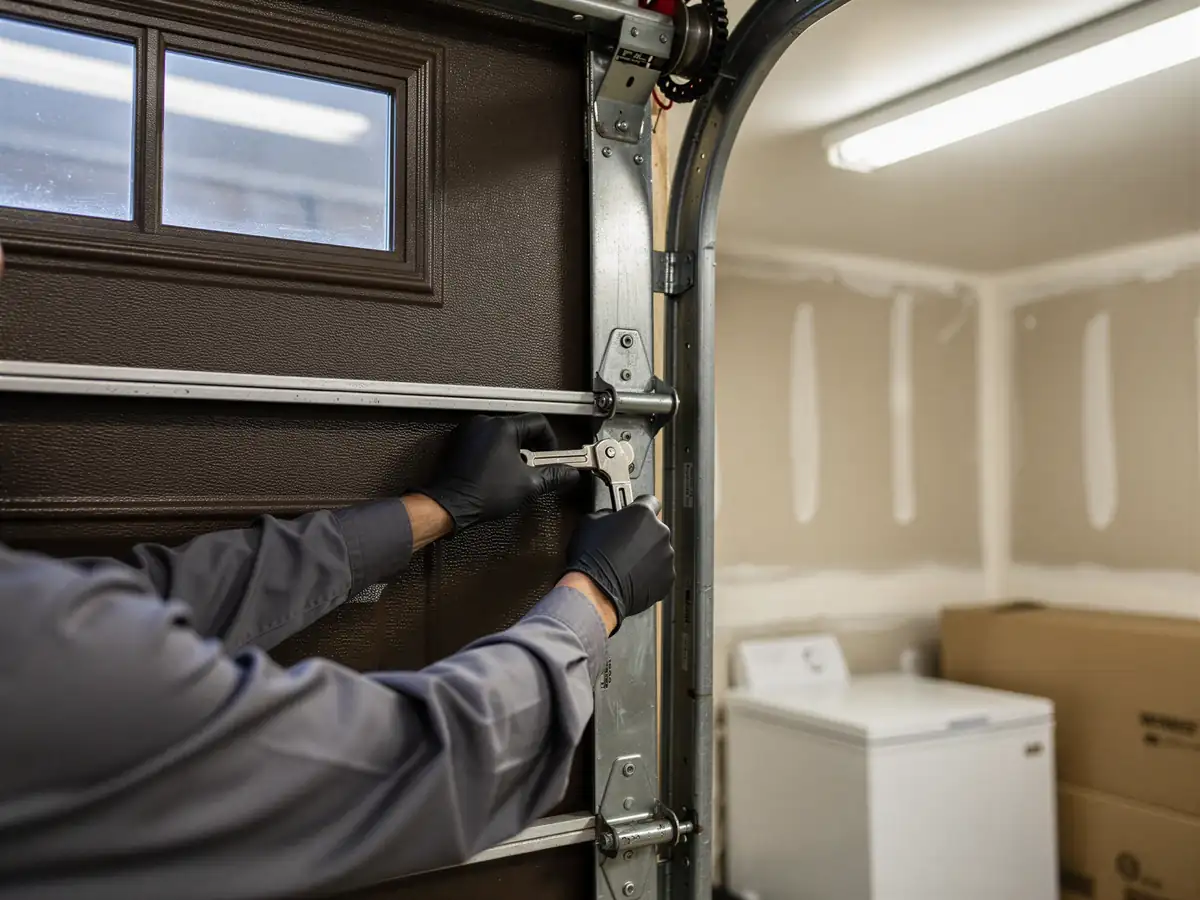
We start by running the door manually to find exactly where it drags or chatters, then pull the track covers to look at each roller stem and bearing. On a 2002-build door, we're usually looking at the original 7-ball nylon rollers, so the first decision is whether to replace like-for-like or step up to sealed steel ball-bearing rollers, which run quieter and hold up longer against the area's humidity swings between seasons.
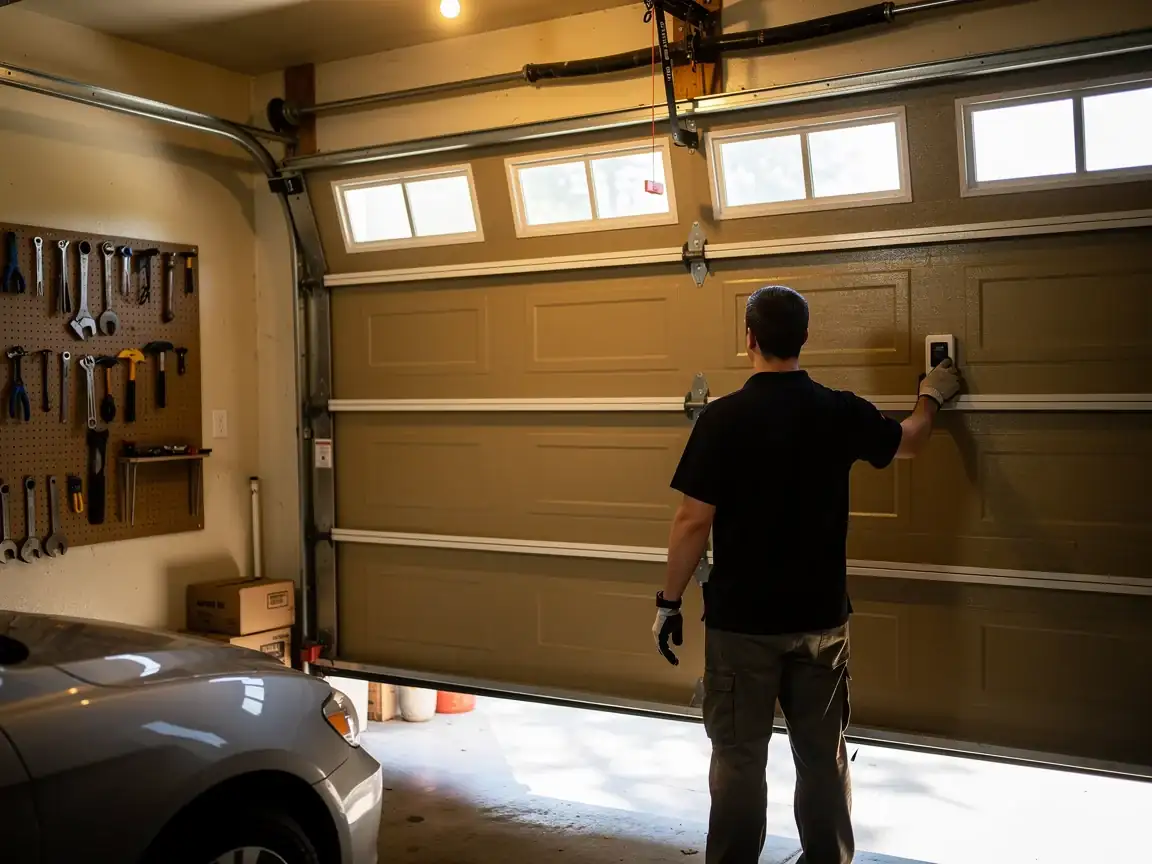
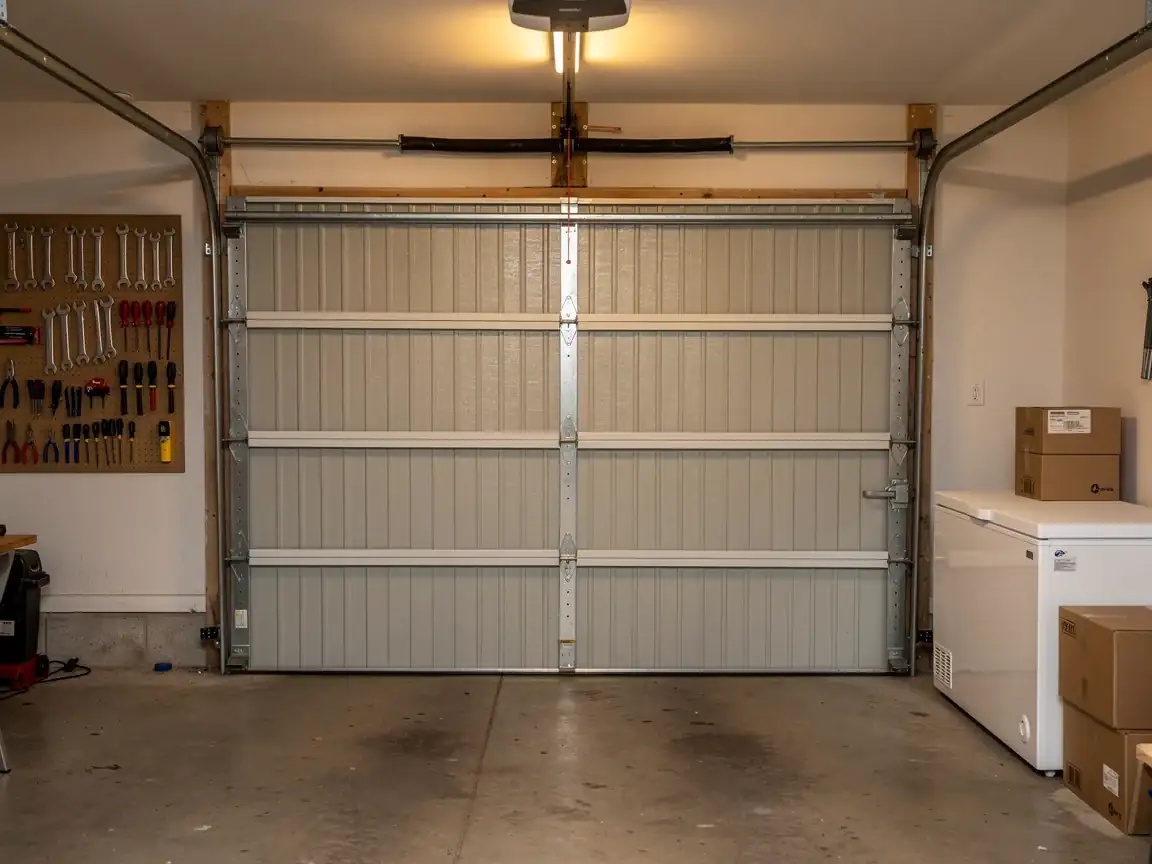
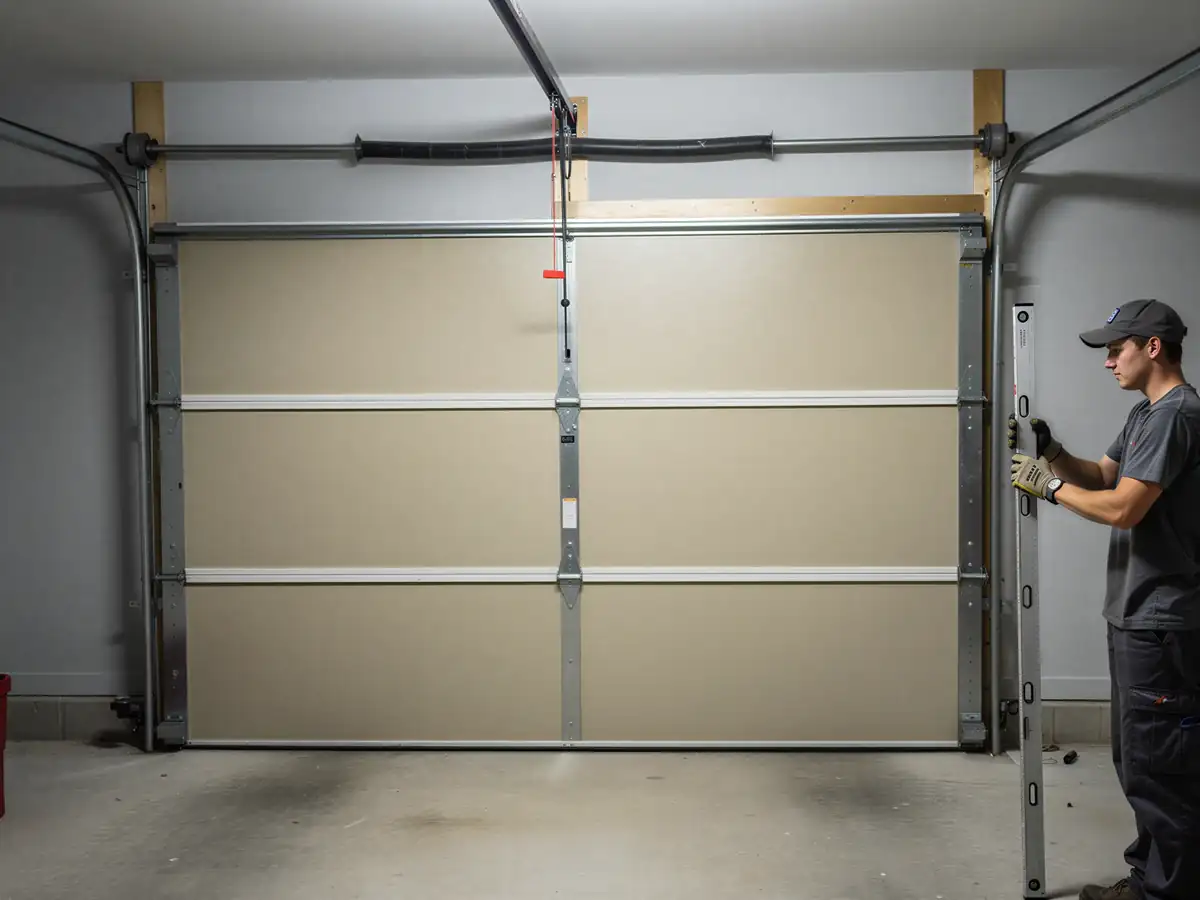
After pulling the worn rollers, we clean the track groove - this is the step that gets skipped on a rushed job and the reason rollers fail again early. Then new rollers go in, we check that both tracks are plumb and parallel, and we cycle the door several times under power to make sure nothing catches. If a bracket's bent from a roller that was binding, we true it up as part of the same visit rather than send a half-fixed door back into service.
We don't replace springs or cables as part of a roller job unless we find one that's actually failing - no reason to charge for work the door doesn't need.