Where This Job Goes Sideways
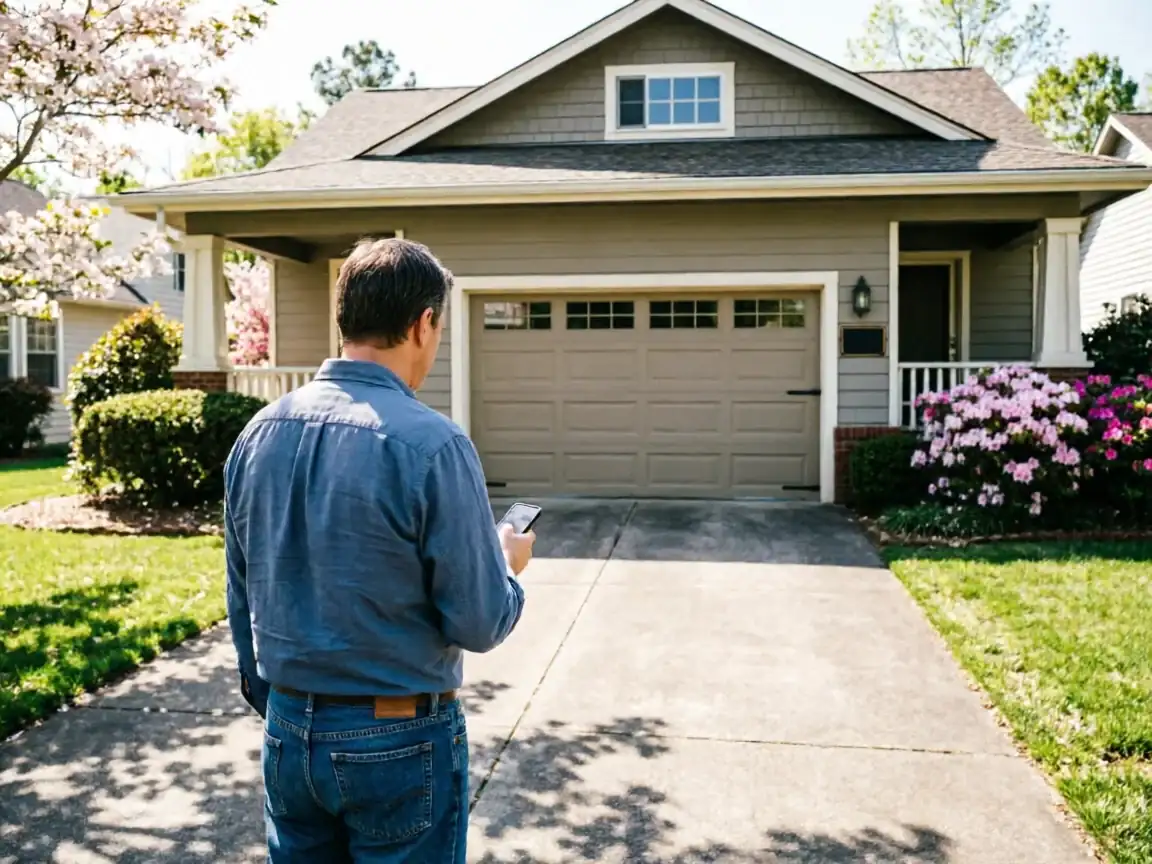
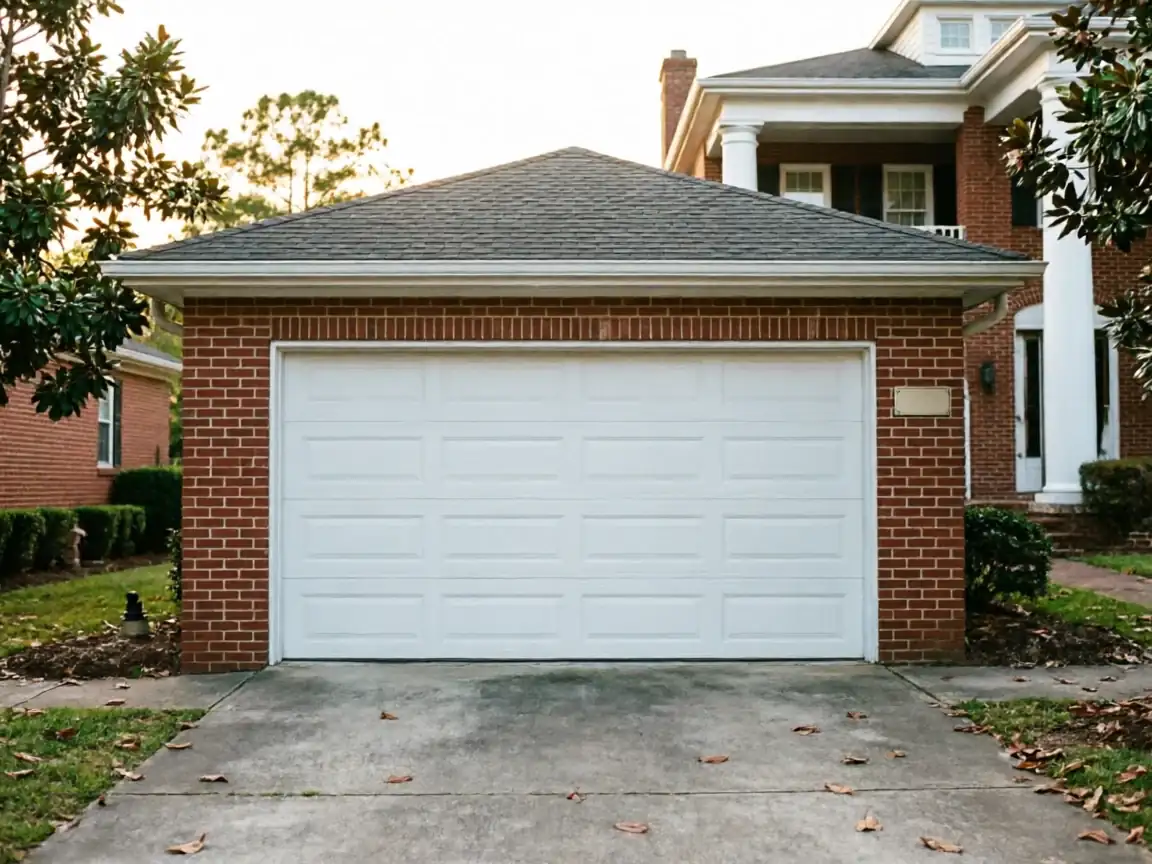
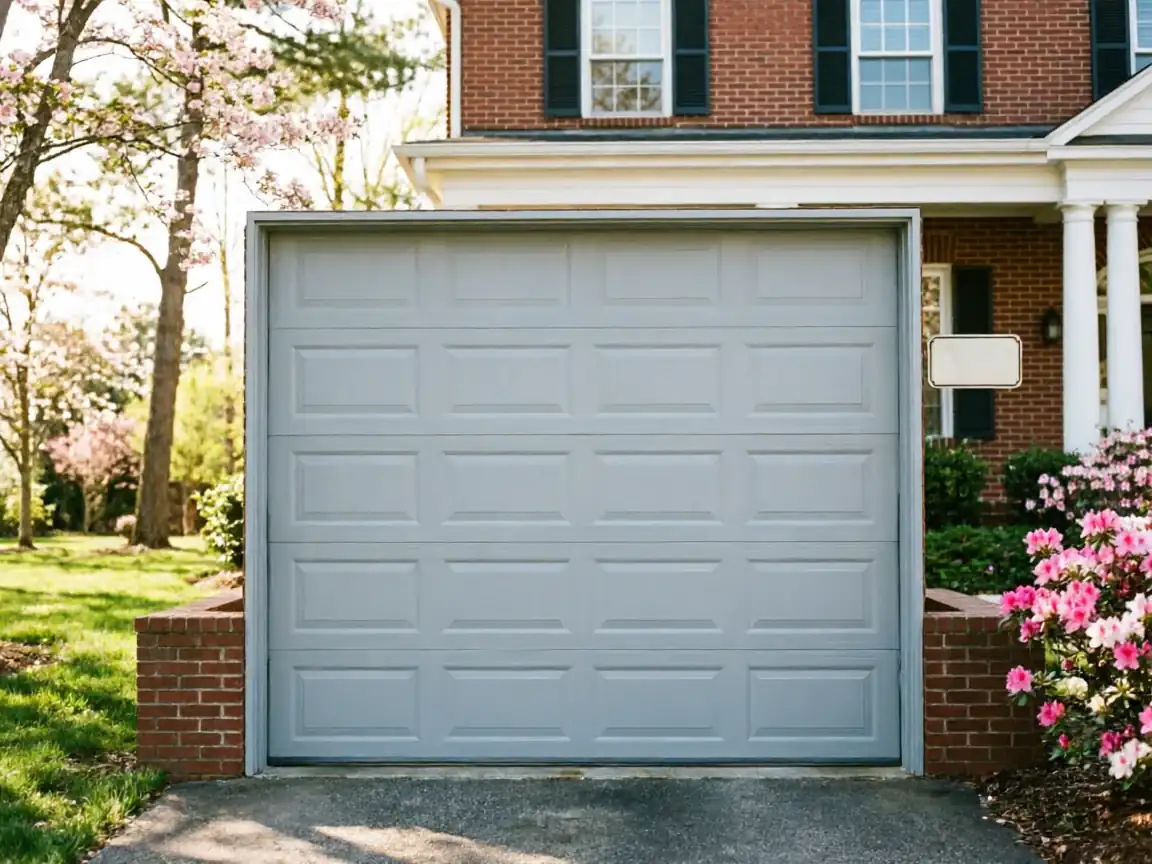
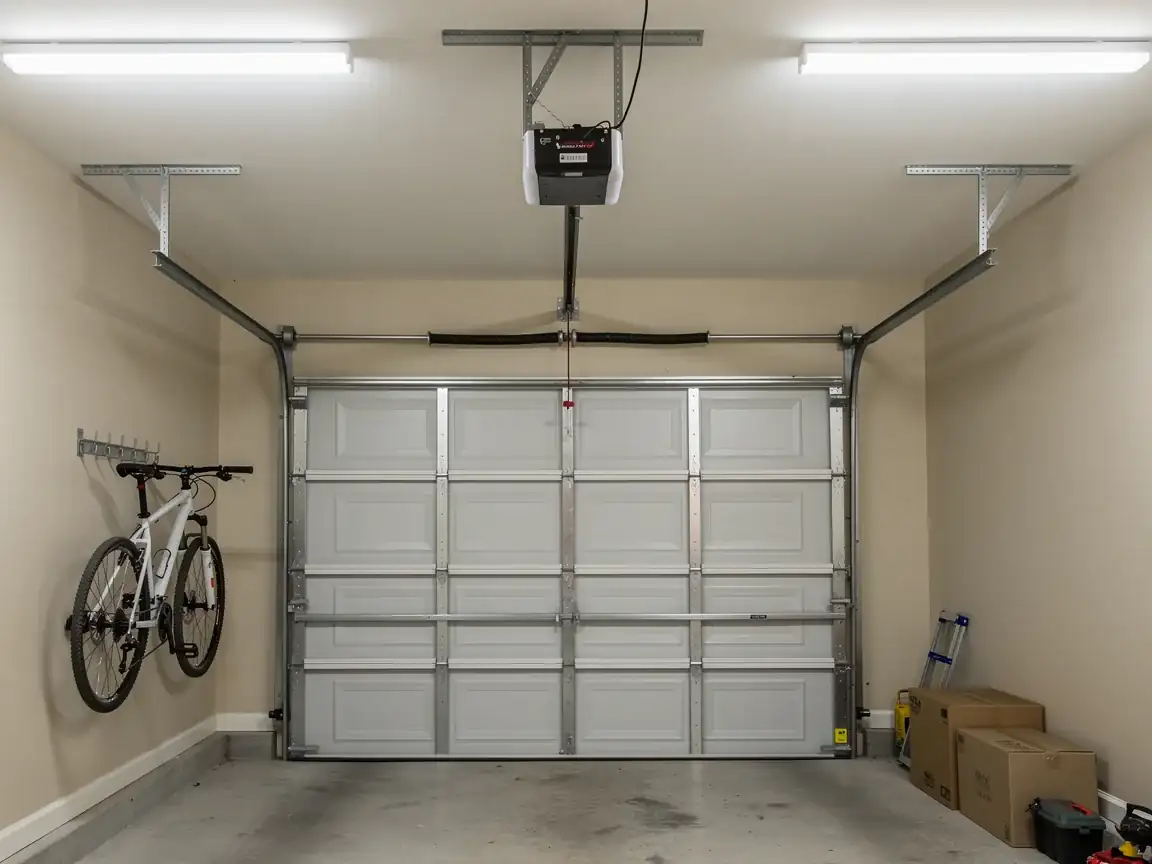
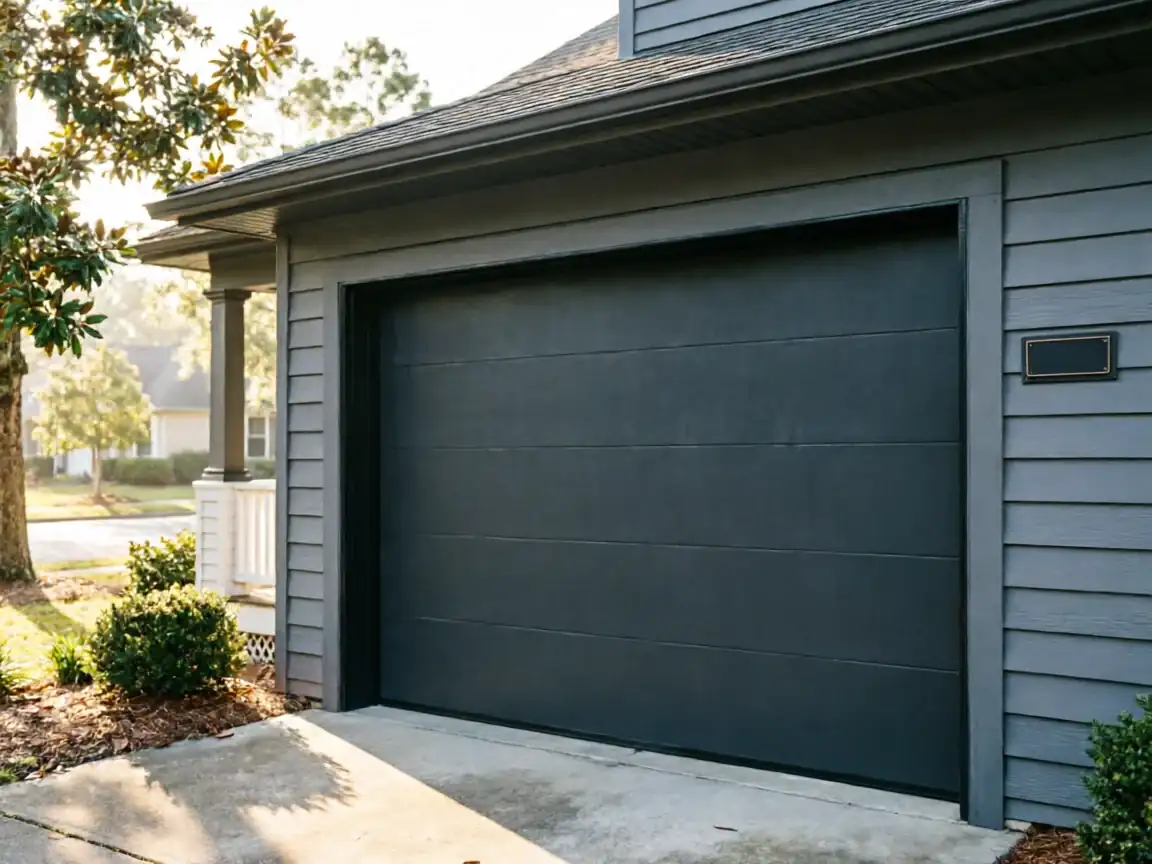
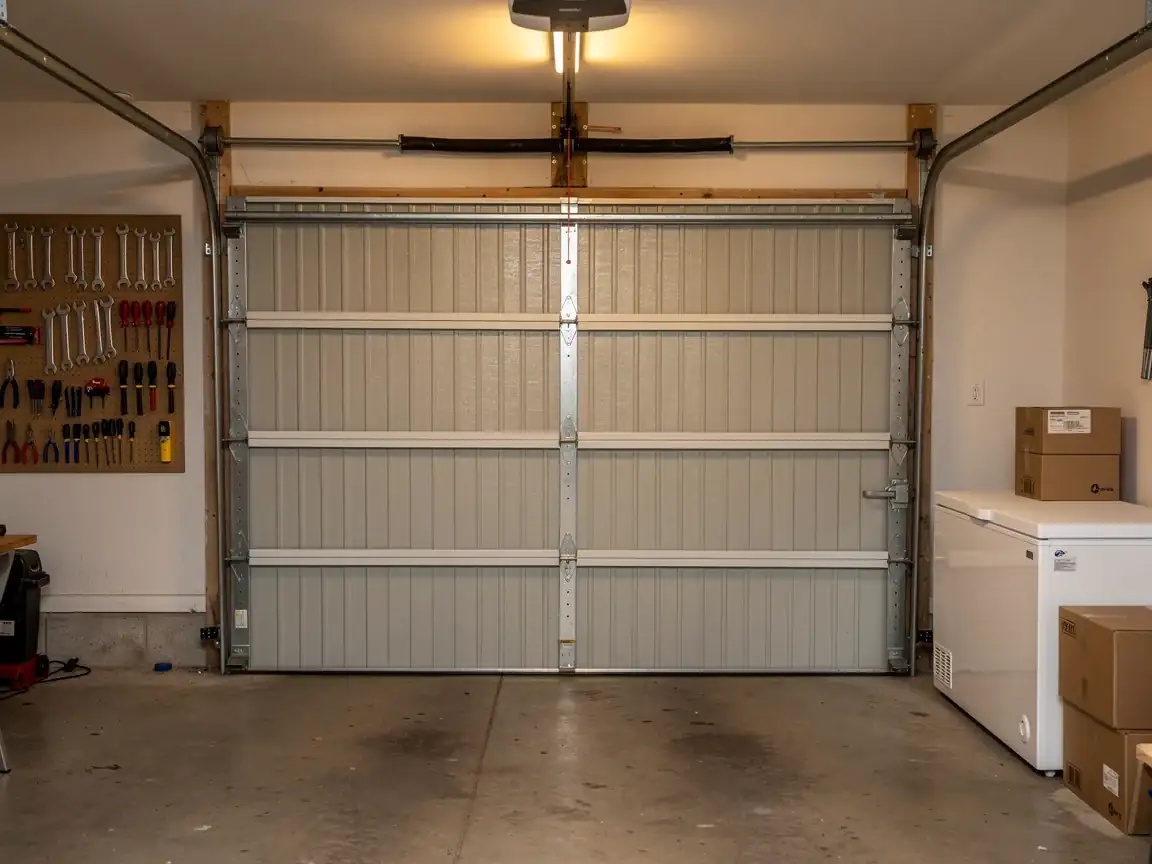
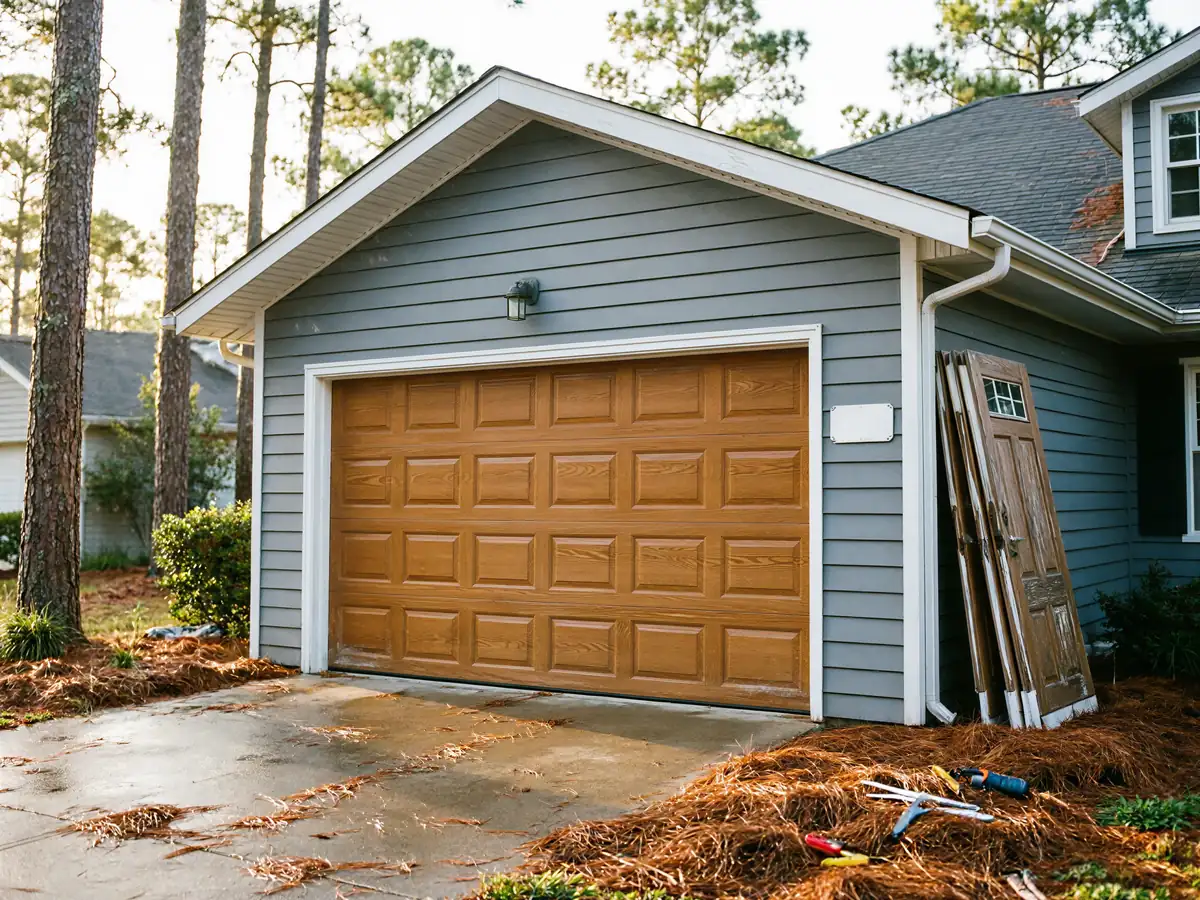
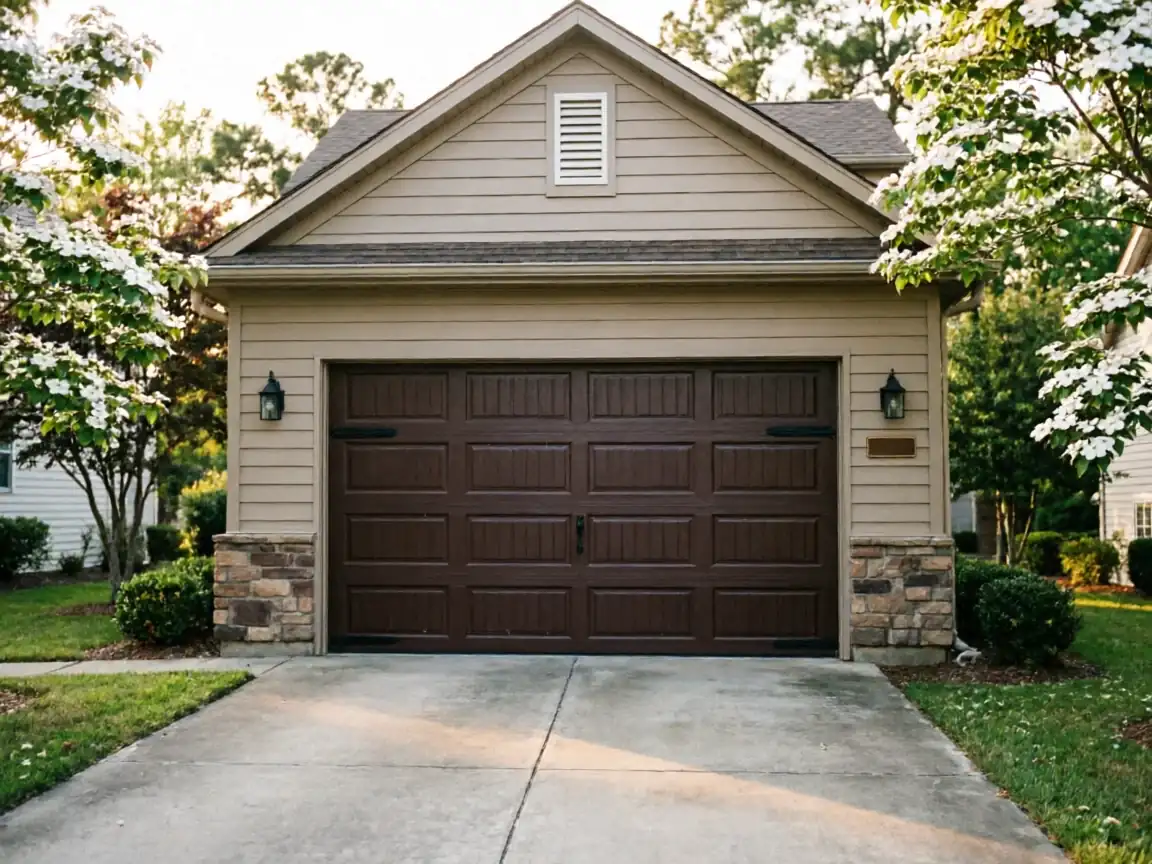
Moundville's houses skew newer than a lot of the rest of this service area - median build year here lands around 2002, well past the 1964-2004 range that covers the broader footprint. That means most garage doors out here aren't the old wood-and-steel hybrids you find in older pockets closer to Tuscaloosa. They're builder-grade steel sectional doors, usually a double-wide on the main house, thin-gauge panels stamped flat or with a light raised profile, often with a factory white or almond finish and not much insulation behind it.
The trouble with that generation of door is the steel itself. It's thinner than what gets installed today, and the factory coating starts chalking and thinning out after enough summers. Add a climate that swings mild most of the year but still drops near freezing some winter nights, and you get condensation cycling on the inside face of the bottom panel. That's where the rust starts - not from a dent, from moisture sitting against bare metal under the paint. By the time you see a bubble or a flake, the steel underneath is already thinner than it looks.
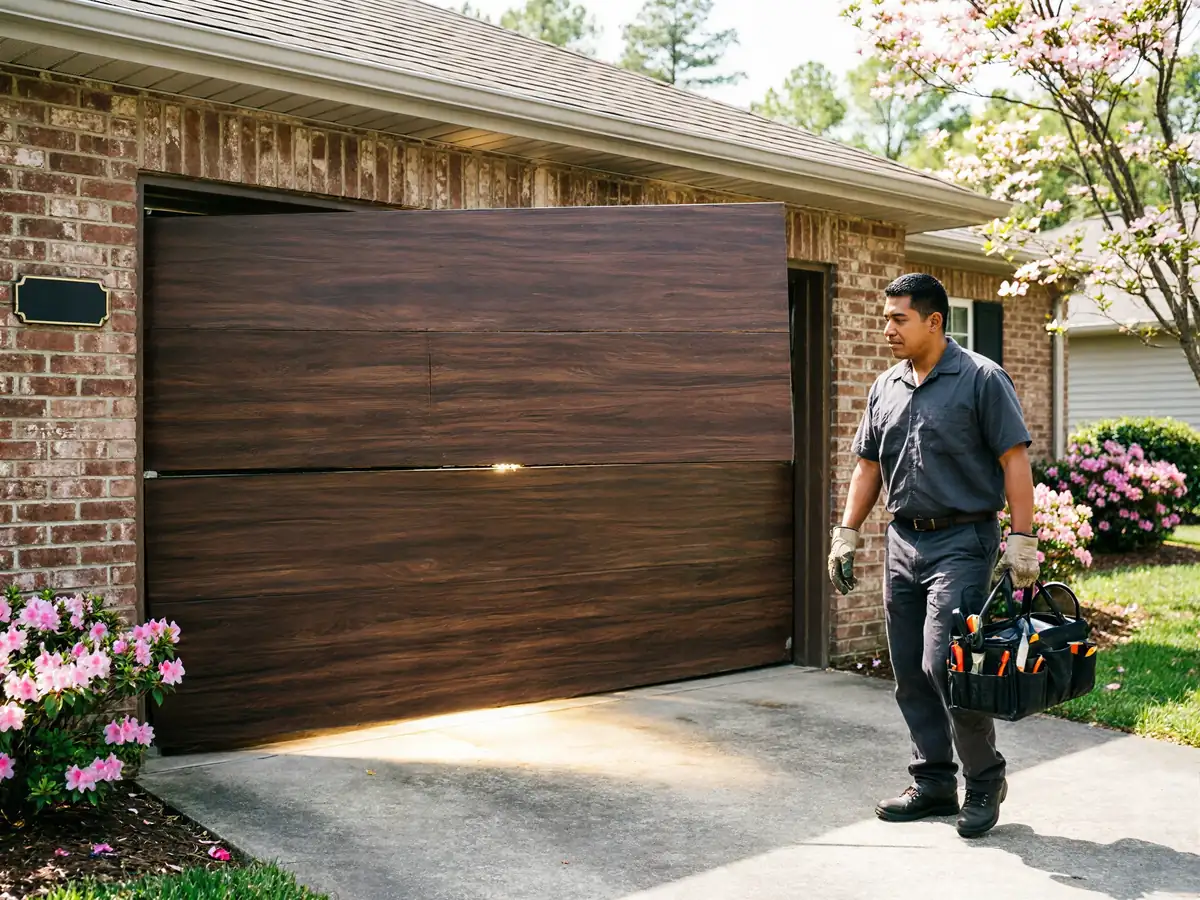
A backed-into panel is the obvious failure. The slow rust-out at the bottom rail is the one people miss until the whole bottom section needs replacing instead of a touch-up.
Can You Do This Yourself
A single panel swap on a sectional door is mechanically simple in theory
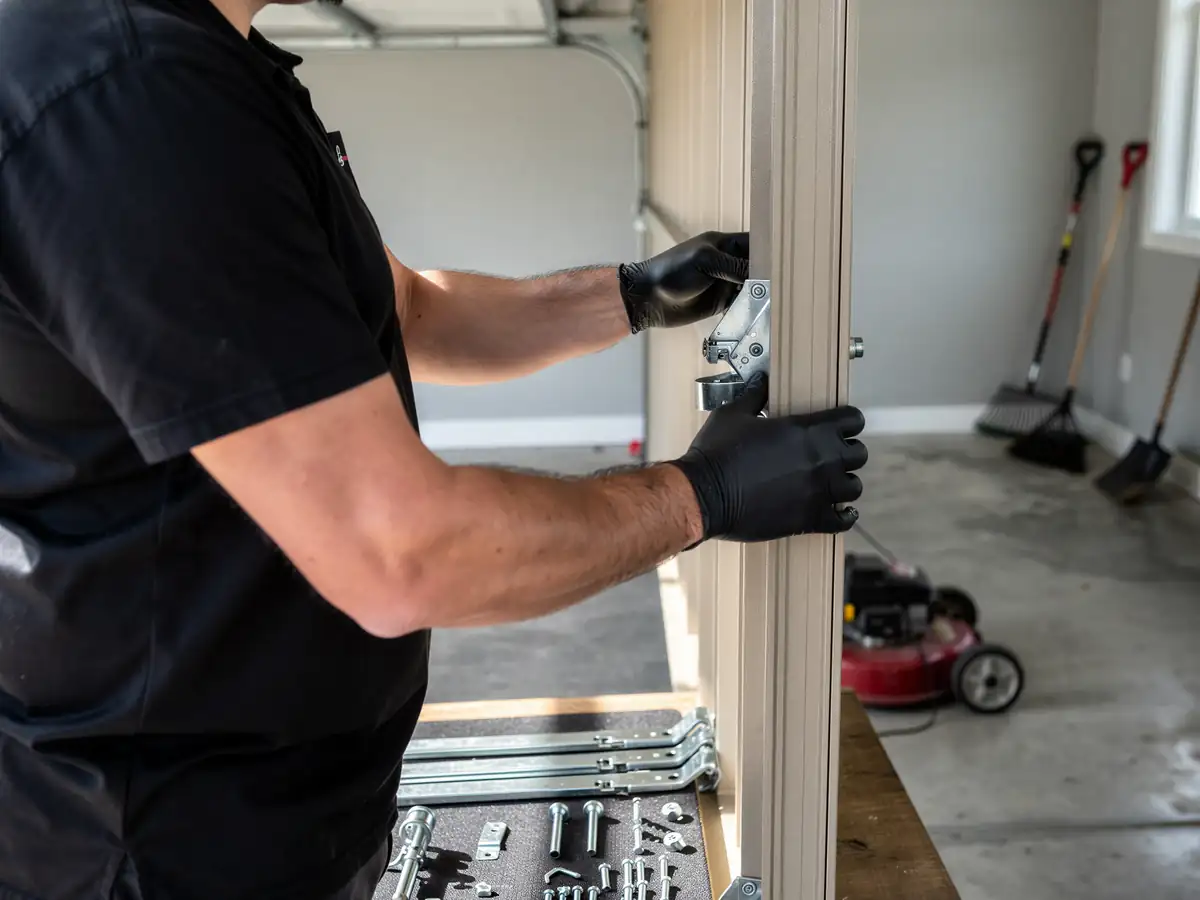
Unbolt the hinges, slide the old section out, slide the new one in, rebolt. In practice it depends on finding the matching panel. Builder-grade doors from the early 2000s were often sold through a handful of national suppliers with specific panel profiles and colors, and if yours has faded or the model's been discontinued, matching a single section to the rest of the door can take longer than the install itself.
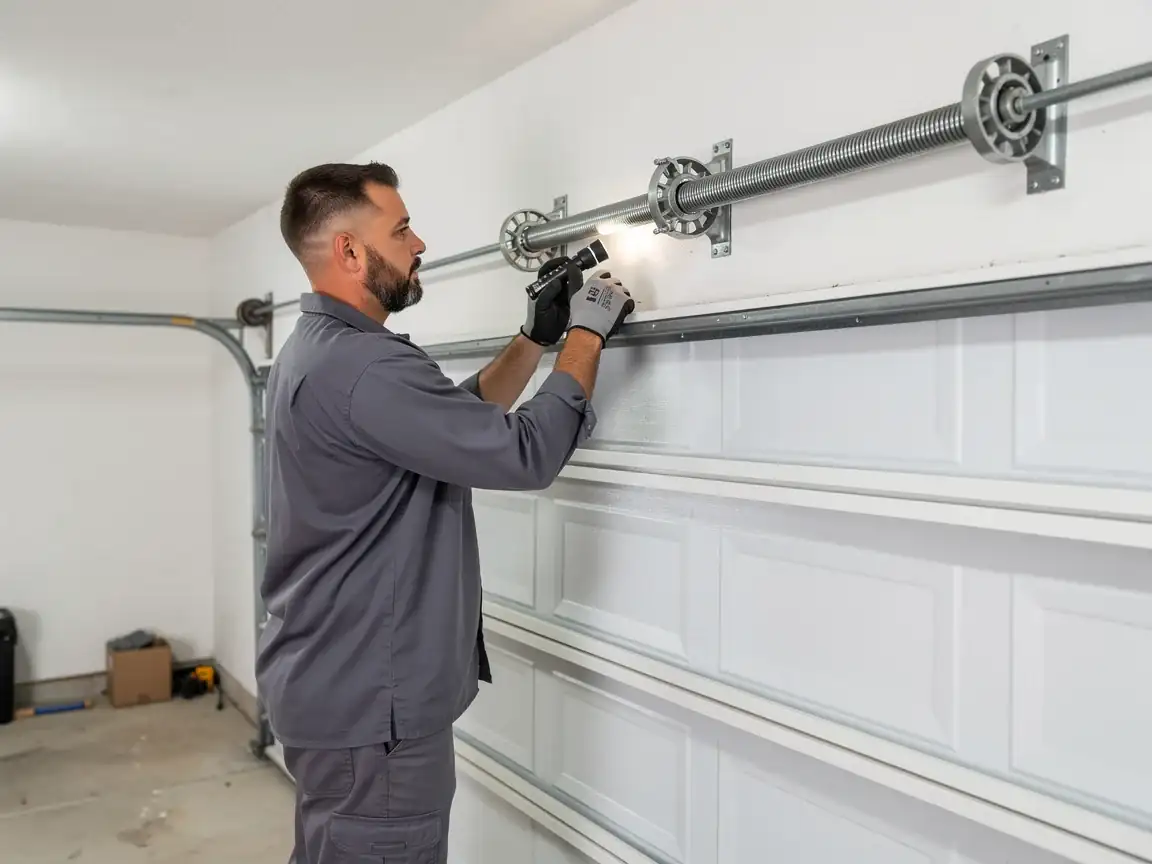
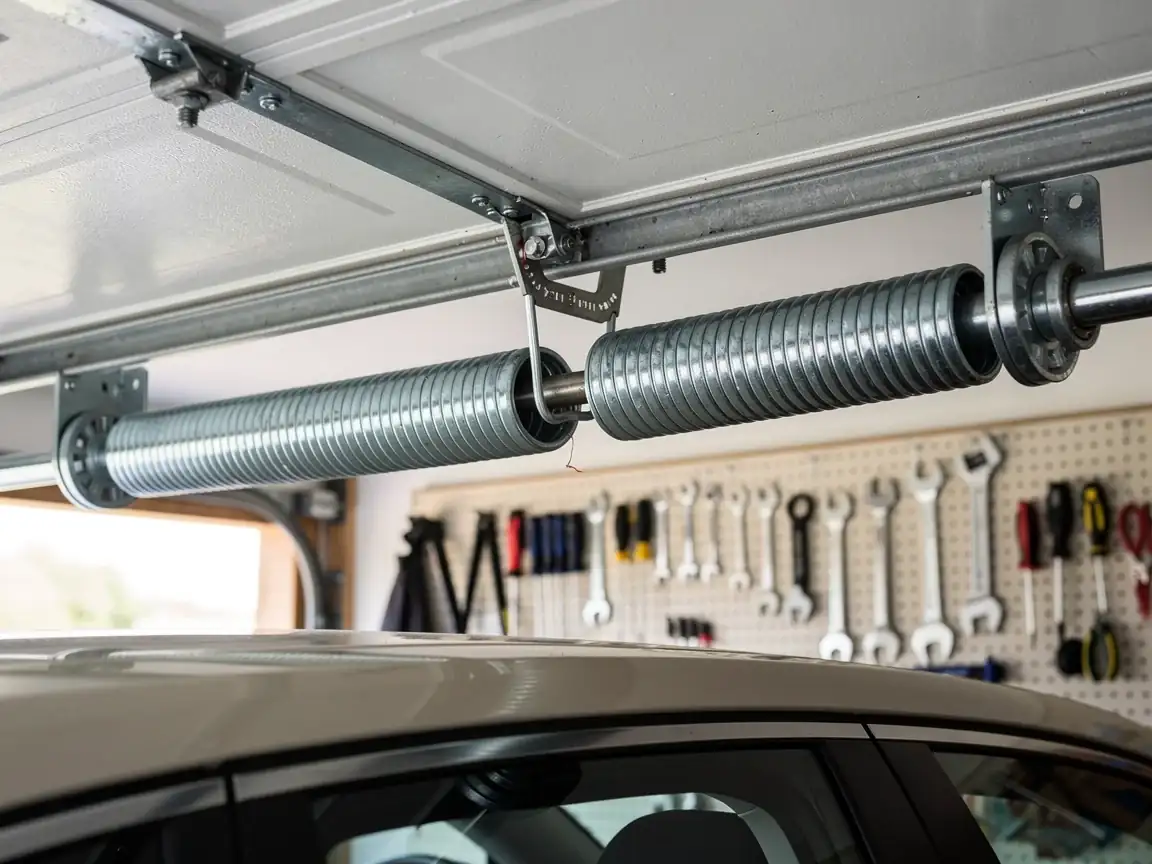
The other catch is the door stays under spring tension the whole time you're working on it
Even for a bottom-panel swap that doesn't touch the spring. If you're not used to supporting a sectional door mid-disassembly, it's easy to rack the track or drop a section on your hand. We'd rather you call and ask what panel you're dealing with before you order one online and find out it doesn't line up. That part costs nothing and saves you a return.
The Cost of This Job
We don't post a flat number for panel work here because the range depends entirely on what's actually wrong - one bottom section with surface rust is a different job than a full double-door's worth of panels after a storm or a vehicle impact. It also depends on whether we can match your existing door's panel profile or whether the whole door needs replacing because the model's no longer made.
What we can tell you: for the builder-grade steel doors common on Moundville's newer housing stock, single and double-panel swaps are usually more cost-effective than full door replacement, as long as the rest of the door - track, springs, opener - is still sound. Once rust has spread past one or two sections, or the door's out of production entirely, replacing the whole door usually works out cheaper than chasing discontinued panels one at a time. We'll tell you straight which side of that line your door is on before we quote anything.
Getting It Booked In
Moundville sits about 17 miles out from our base in Tuscaloosa, so this isn't a same-block callout - we're coming from the shop, not around the corner. That doesn't change what we do once we're there, but it does mean we schedule the run rather than treat it as a drop-in stop, and we'd rather give you a real window than guess at one.
When you call, have the door's basic info ready if you can: roughly how old it is, how many panels wide, and what's actually wrong - rust, a dent, or a section that won't sit flush anymore. That's usually enough for us to bring the right panel stock on the first trip instead of a second visit just to measure.
Time on the Job
A straightforward single-panel swap
Where we've got a matching section and the track and hinges are in decent shape, doesn't take long once we're on site - it's one of the quicker jobs we do. Multi-panel replacement runs longer, especially if we're realigning hinges across sections that have shifted slightly over twenty-plus years of use.
What stretches the timeline isn't the labor, it's sourcing
If your door's panel profile is out of production - common enough with early-2000s builder-grade doors once a model line gets discontinued - getting the right replacement section can take longer than the actual swap. We'd rather tell you that up front than promise a same-day fix we can't back up.
What the Fix Involves
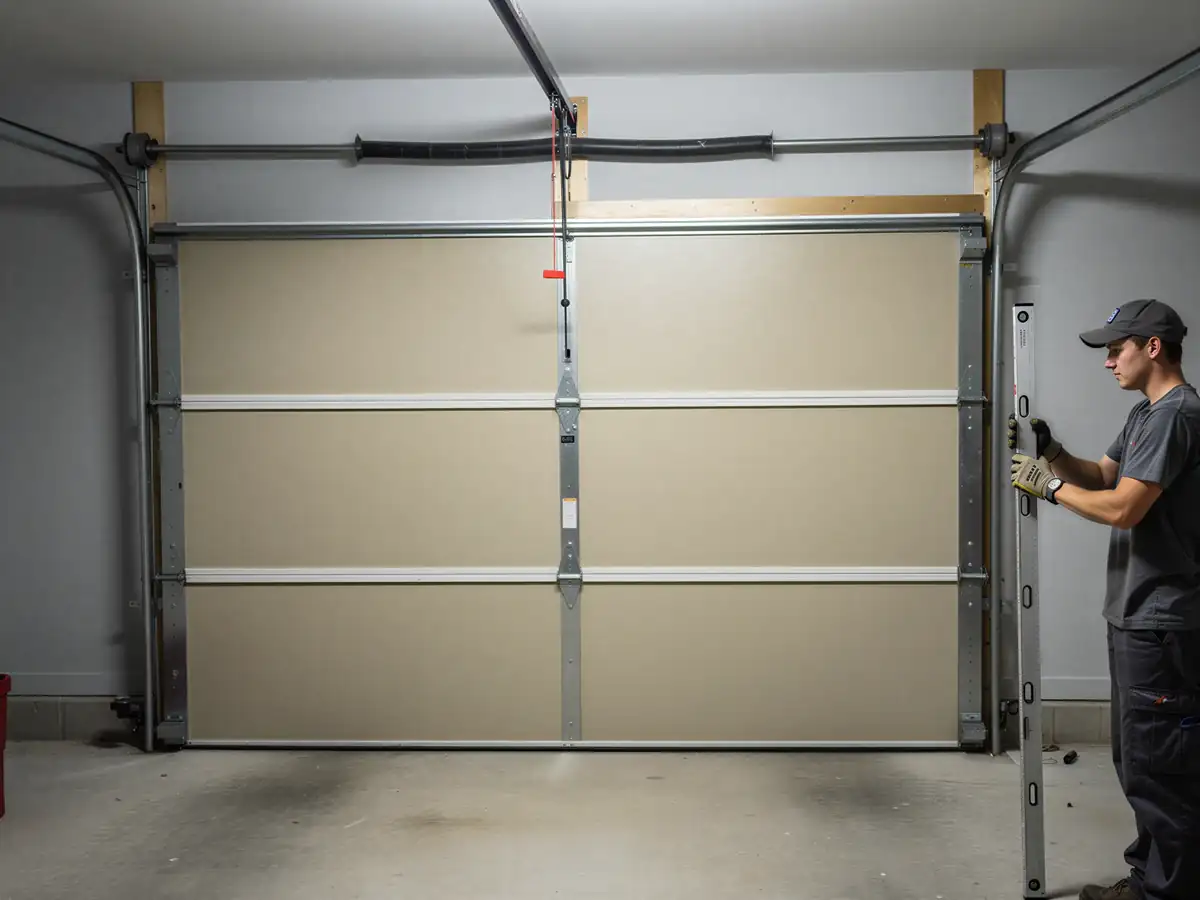
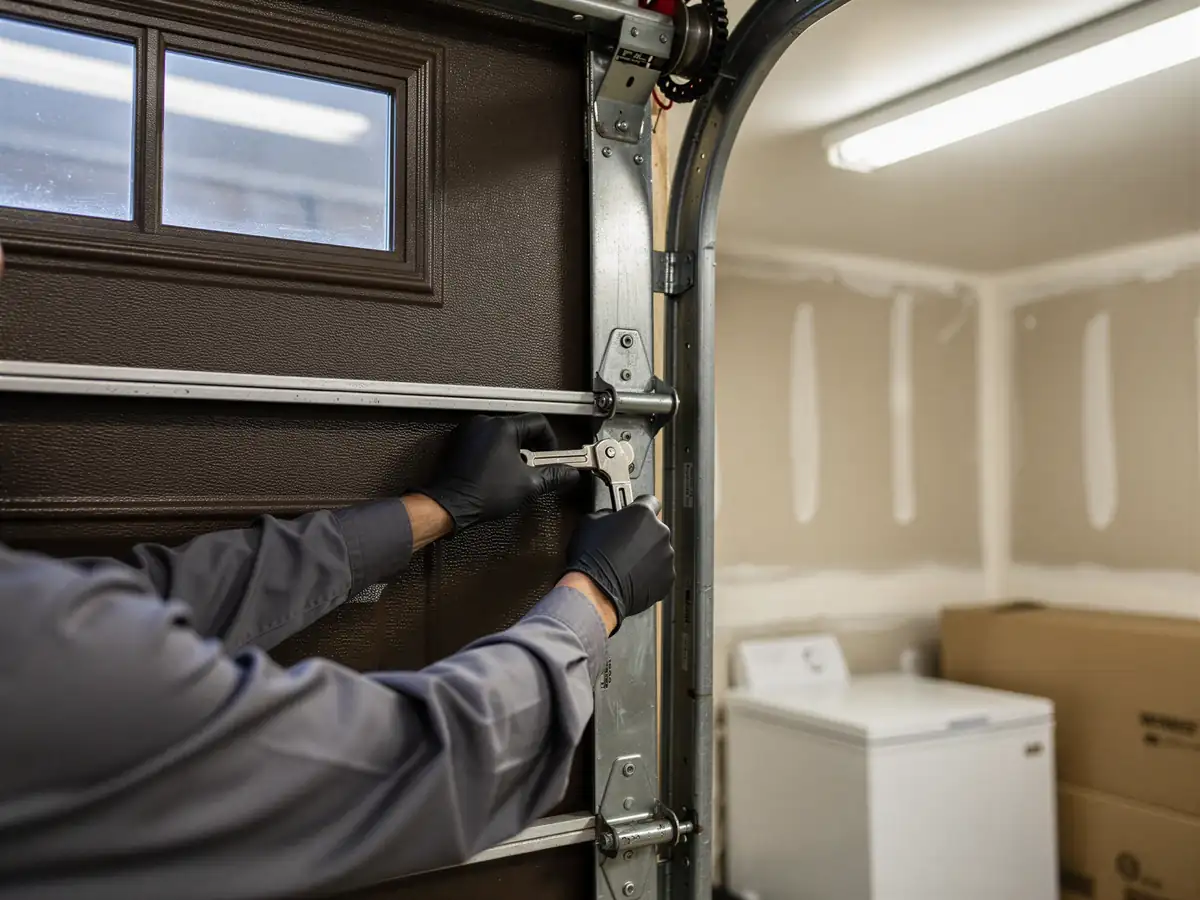
For a rusted or dented section, the job starts with identifying the exact panel profile and finish so the replacement sits flush with the rest of the door - mismatched panels are obvious from the driveway, not just up close. We disconnect the door from the opener and support it on the track before removing the hinges holding the damaged section to its neighbors.
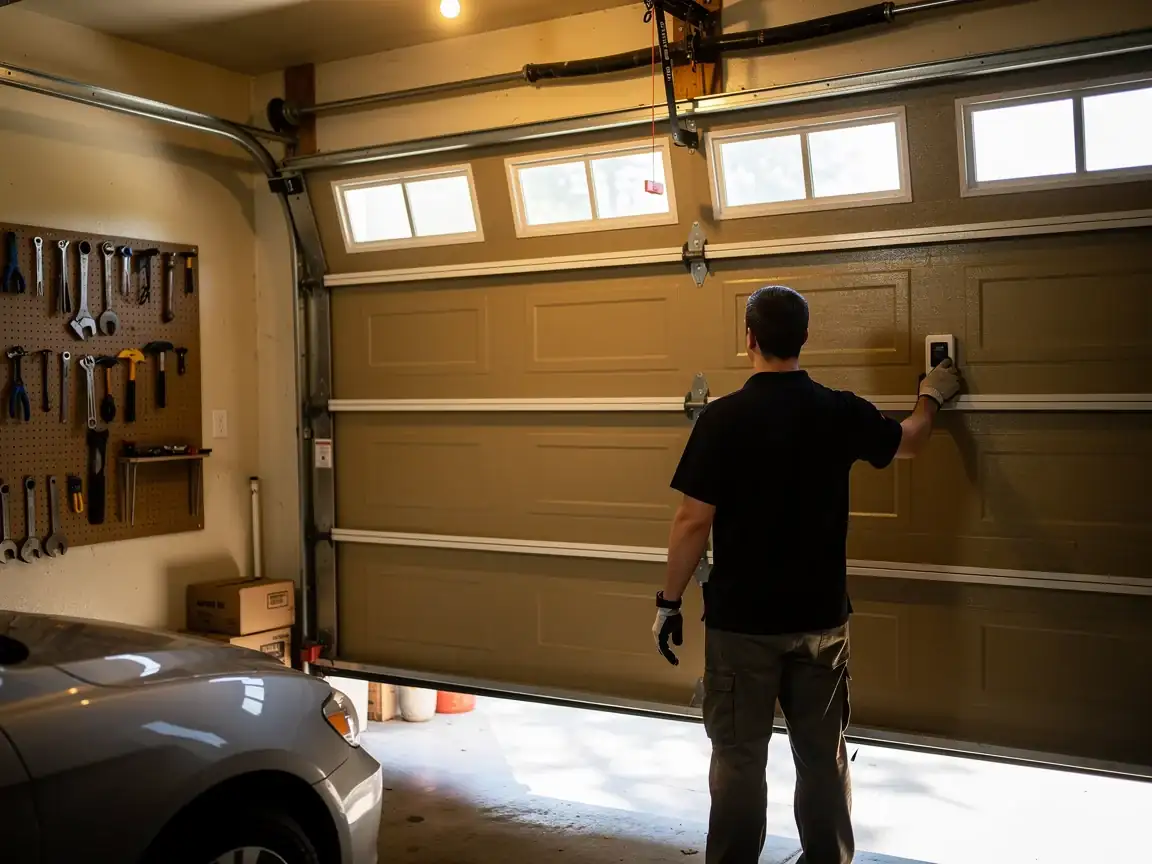
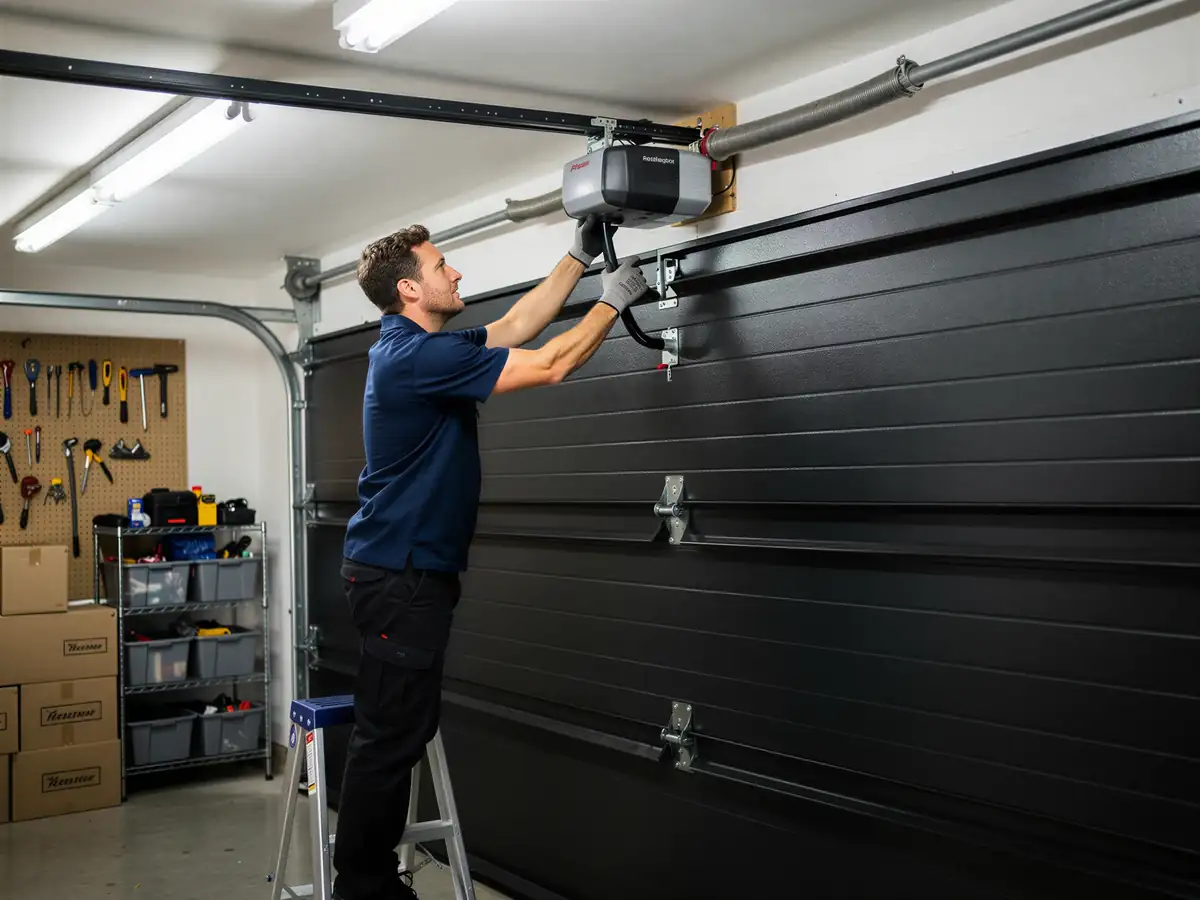
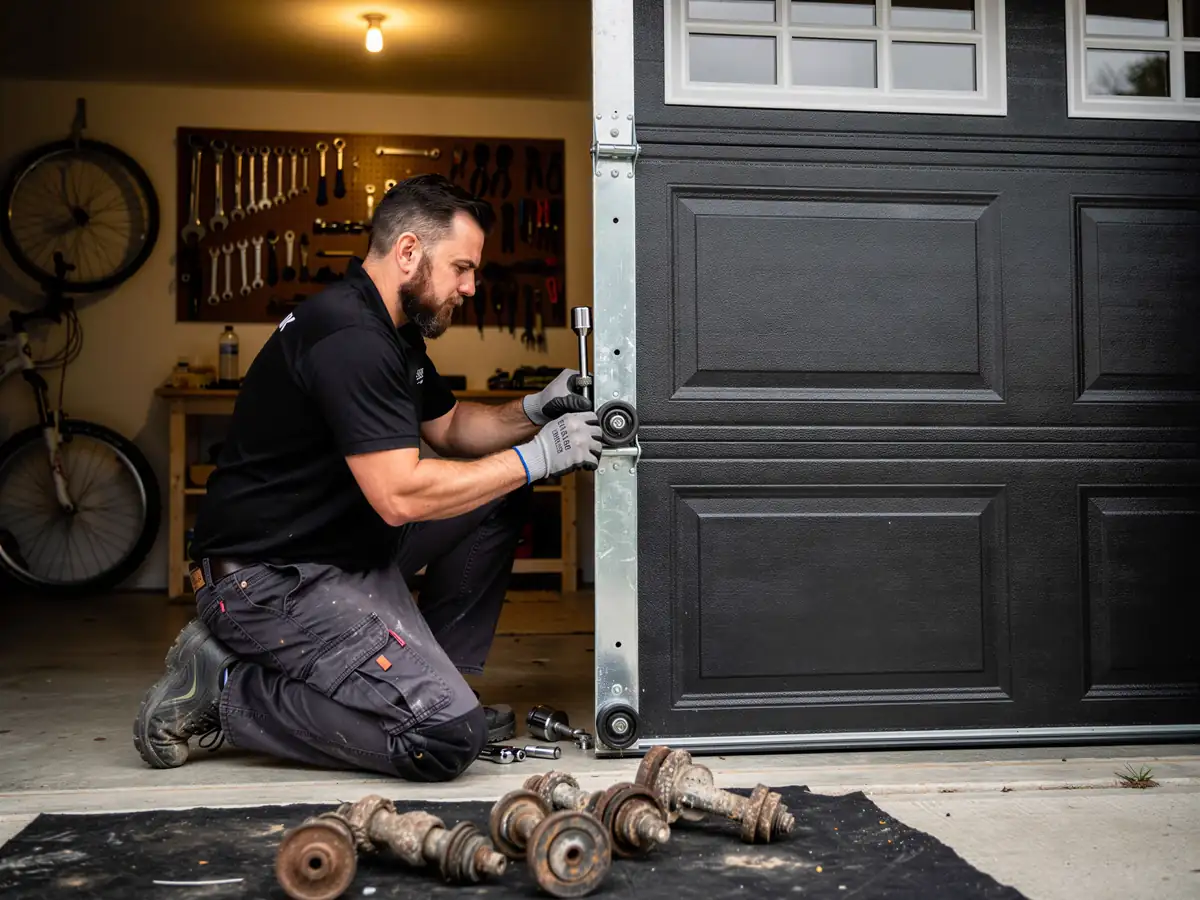
Once the bad panel's out, we check the hinges, rollers, and track alignment on that section before fitting the new one - a panel swap is also the point where we catch a roller that's about to seize or a hinge that's cracked, since they're already exposed. We rehang the section, rebolt the hinges, and run the door through a full open-close cycle to check for binding or noise before reconnecting the opener. If the rest of the door is original and the finish doesn't match perfectly, we'll say so rather than pretend a 20-year-old color is an exact match.